“I was taking selfish penalties I wasn’t proud of.”
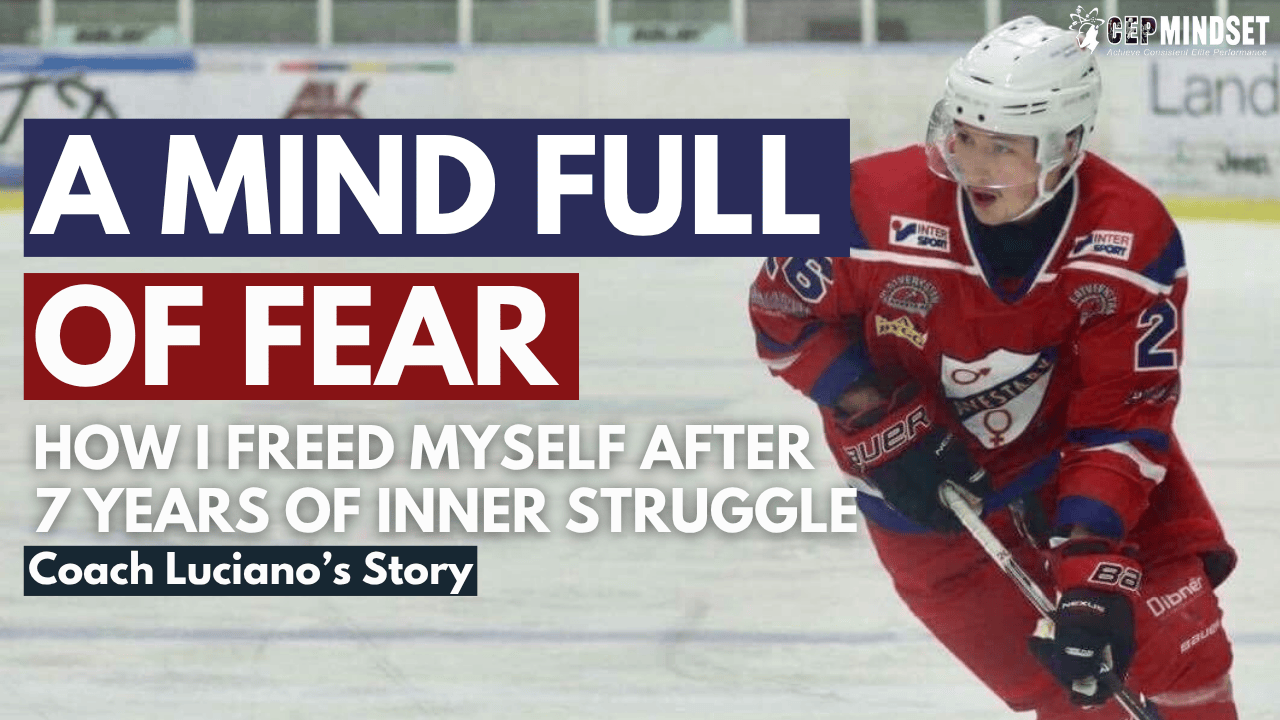
That’s how Thomas Stewart described himself before we started working together. He was a talented hockey player whose emotions and results-focus were getting the best of him.
He chased points.
He chased outcomes.
He chased perfection.
And when things didn’t go his way? His temper took over.
Those emotions didn’t just hurt him — they hurt his team. The frustration followed him off the ice too, creeping into school, relationships, and daily life.
He knew something had to change.
Mental training was new — almost foreign — but once he opened up, everything clicked. What started as skepticism quickly turned into one of the most important parts of his development.
Phase 1: Letting Go
Before CEP, his identity lived inside his stat line.
If he wasn’t scoring or producing, he felt like he wasn’t contributing. If something went wrong, anger filled the gap.
His emotions dictated his decisions — and every bad bounce became a reason to grip the stick tighter.
The results?
- Unnecessary penalties
- Frustration on the bench
- Spirals that carried into life outside hockey
He said it himself:
“I wasn’t pleased with who I was becoming.”
The turning point came when he learned how to detach from outcomes he couldn’t control. Once he stopped obsessing over results, the game opened up — and so did he.
He wasn’t fighting the game anymore. He was playing it.
Phase 2: Emotional Stability
“Working with Cassidy didn’t feel like therapy — it felt like a real conversation.”
Prompts.
Reflection.
Honest dialogue.
Support without judgment.
That made him open up. And once he did, we started building a base of mental skills he still uses today.
He learned to manage his emotions under pressure. To accept and let go of outcomes out of his control. And bouncing back after mistakes instead of letting them through him off.
He said it best:
“Hockey throws a lot at you… and he helped me balance my emotions in ways I couldn’t have done on my own.”
Emotional awareness didn’t make him soft — it made him steady.
And most importantly, it helped him rise the ranks.
Phase 3: Rising the Ranks
When we started working together, he was still a kid — raw, emotional, hungry.
But mental performance work helped him get drafted and make the jump to junior hockey. Then thrive under the pressures of playing the OHL. He became an assistant captain and a better leader in the dressing room. And most recently, he has made the transition into professional hockey.
Rising the ranks from minor hockey to junior to pro hockey brings challenges no one really talks about — trades, call-ups, cuts, new guys arriving each week. It can shake even the strongest players.
But through all of it, he had a toolbox of strategies to deal with the pressures, adversities, and distractions of climbing the ranks.
That’s what mindset coaching is all about — creating mental stability in a world that is inherently full of surprises, setbacks, and uncertainty.
The Takeaway
His journey is a great example of the Mindset First approach — which is all about understanding your emotions, getting centered, and tackling the game with full confidence.
I call this the “inside-out” approach.
Where most athletes get tripped up is going “outside-in” and letting the external world dictate how they feel.
But when athletes can shift from emotional chaos to emotional control like Thomas, they can change the trajectory of their career.
This blog was written by Coach Cassidy.

 Blair has over 13 years of experience as a Professional Dancer, Assistant Dance Captain & Cast Manager, as well as an additional 17 years of training. Over the last 3 decades, she has lived and experienced first hand the highest of highs & lowest of lows that come with pursuing a career in the Performing Arts.


 As a former member of McMaster University’s women’s soccer team, Emilie intimately understands the demands and challenges athletes face on and off the field. Although she encountered many challenges as a high-level athlete, particularly struggling with self-doubt and overthinking, Emilie was able to make a remarkable transformation when she began to embrace the principles of sports psychology.








 Danielle Hanus, MA
 Monica Russell, MA