
It’s my last year of junior hockey and I get a perfect pass in the slot. I eye the top right corner. Pull the puck in and fire it on target.
Robbed — the goalie flashes his glove.
“Are you kidding me?!” I mutter, burying my face in my hands as I skate back to the bench.
Next shift, I’m determined to make up for it. A 3-on-2 rush develops — puck on my stick. The defense is falling back and the high-guy is becoming open.
I hesitate. Too early, and my pass gets picked off. Too late, and it’s stripped. My grip tightens, thoughts cloud, and I force it. The defender deflects it easily.
Back on the bench, I slam the boards. “Damn it, I suck at hockey.”
Which is a ridiculous statement because I don’t suck.
There are only a few games left in that season. And at the end of it — I’ll have put up 74 points in 49 games. I’m a point and half per game player.
But in 20 of the 49 games I put up no points.
Which means the other 29 games I was dialed in. And 20 games I was not.
AKA I was Mr. Inconsistent.
After the season when I looked at the stats a little further — I realized that in the 29 games that I got a point, I almost always got a point in the first period. Which cued the confidence and more results to come.
But, when I didn’t get a point in the first period – I’d get frustrated, grip the stick tighter, and my confidence quickly dropped.
So in this current game – after a no point first period, cue the full fledged downward spiral for the second period.
The good news was that many of my teammates were playing great in this game. The other lines are scoring at will.
Which you think is a good thing, but in my head it was driving me crazy.
By the end of the second period I’m sitting on the bench thinking “how are these guys putting up all these points, they are not even that good?”
To be clear, I said that in my head — not out loud.
Not surprisingly, my body language reeks and I’m completely useless for the entire third period.
The game ends, we win 7-4, and I put up no points. I’m a little bit happy for the team winning, but I get undressed quickly, get in the car, and call my dad. I pour out every negative thought I had boiling inside me:
How do I get zero points in a seven-goal game?
Why are my teammates scoring when I can’t?
What’s wrong with me?
To his credit, he just listened. Something he had learned the hard way after years of not knowing when to zip it after games. It’s so important to have that safe place to be able to flush out your most inner thoughts and feelings.
When I finally ran out of steam, he asked:
“Okay. What are your teammates doing well?”
I paused. “They’re working hard. Going to the net. Doing the little things.”
“Could you do those things better?”
Silence. Then it hit me. “Ahhh… shit. I guess so.”
And just like that, my perspective shifted. Instead of being jealous of my teammates, I could learn from them. Be inspired by them.
I feel like I’m taking a breath of fresh air as I emerge out of a toxic haze.
We have a game the next day where I can try out this new mindset.
Instead of focusing on the external results and comparisons. I let go of all the noise. I go into the game feeling light and excited to play.
Instead of trying to force myself to play well and put up points. I focus on how I want to show up and who I want to be. I just trust my training.
Instead of making everything about the results. I remember it’s just a game. It’s like I’m back to being 10 years old playing on the Outdoor Rink – feeling free, confident and just enjoying the game I love.
The results?
Goal. Assist. Another assist. By the second period, I lost count.
When the game ends, someone has to go to the scoresheet to count it up. I set a single-game record for that team — a 9 point game!
Not bad for Mr. Inconsistent eh?
I know I’m pumping my own tires here, but I share this story not to relive my glory days, rather the yo-yo confidence I experienced is one of the most common challenges athletes face today.
The day before I was terrible. 0 points in a 7 goal game. My confidence was in shambles. I was questioning everything.
But this game I was a different player. I didn’t get better at hockey from one day to the next. Instead, that moment with my dad helped shift my mindset: I let go of the noise, set my intentions, and reconnected to the love of the game.
Unfortunately for me, I didn’t know how to bottle up this mental process.
My dad was certainly not a mental performance expert and he didn’t have a system to help me consistently play with confidence.
But fortunately for you, I’ve since bottled this into a simple 3-phase process I now teach NHL players:
Phase 1: Preparation Mode
This is where you do all the thinking and you set your intentions for how you want to show up.
Phase 2: Performance Mode
Now it’s time to turn your brain off and just play. You need to let go of all the noise and just play free.
Phase 3: Reflection Mode
After the practice or game is the time to self-assess. Reflecting on your mindset and process. This is key to the learning cycle and an important opportunity to make sure you own your wins and build internal momentum.
I’ll go into more detail for each of 3 phases with you next week.
For now, remember that if I could go from the depths of despair to feeling free and confident the next day — that you can too.
Does that mean if you let go of the noise, set your intentions, and reconnect to the love of the game that you’ll put up 9 points? Probably not. But hey, maybe!
What it does mean is that you can play with unshakeable confidence. And that is the key to achieving Consistent Elite Performance.
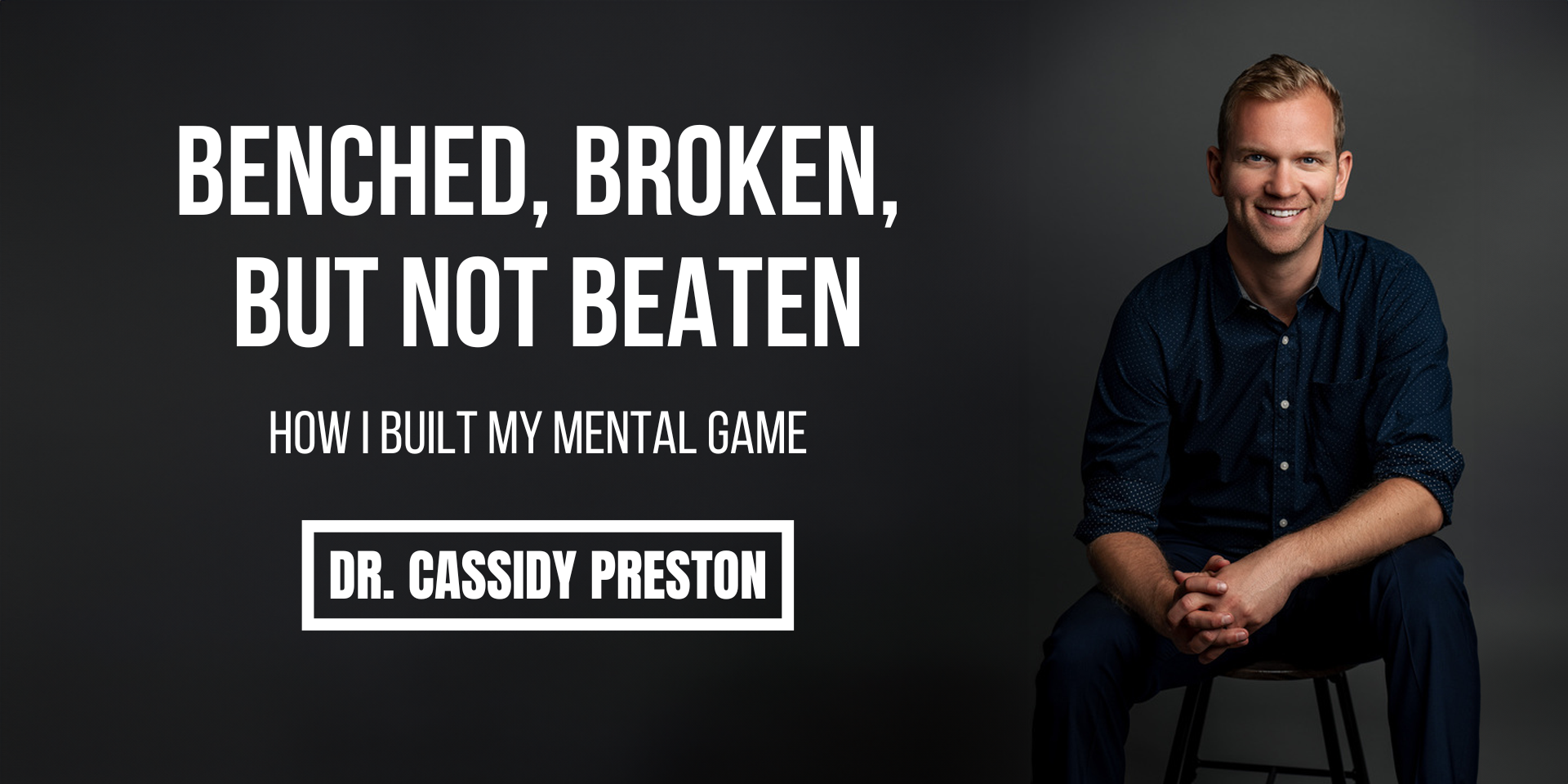
This blog was written by Coach Cassidy.
 Blair has over 13 years of experience as a Professional Dancer, Assistant Dance Captain & Cast Manager, as well as an additional 17 years of training. Over the last 3 decades, she has lived and experienced first hand the highest of highs & lowest of lows that come with pursuing a career in the Performing Arts.


 As a former member of McMaster University’s women’s soccer team, Emilie intimately understands the demands and challenges athletes face on and off the field. Although she encountered many challenges as a high-level athlete, particularly struggling with self-doubt and overthinking, Emilie was able to make a remarkable transformation when she began to embrace the principles of sports psychology.








 Danielle Hanus, MA
 Monica Russell, MA