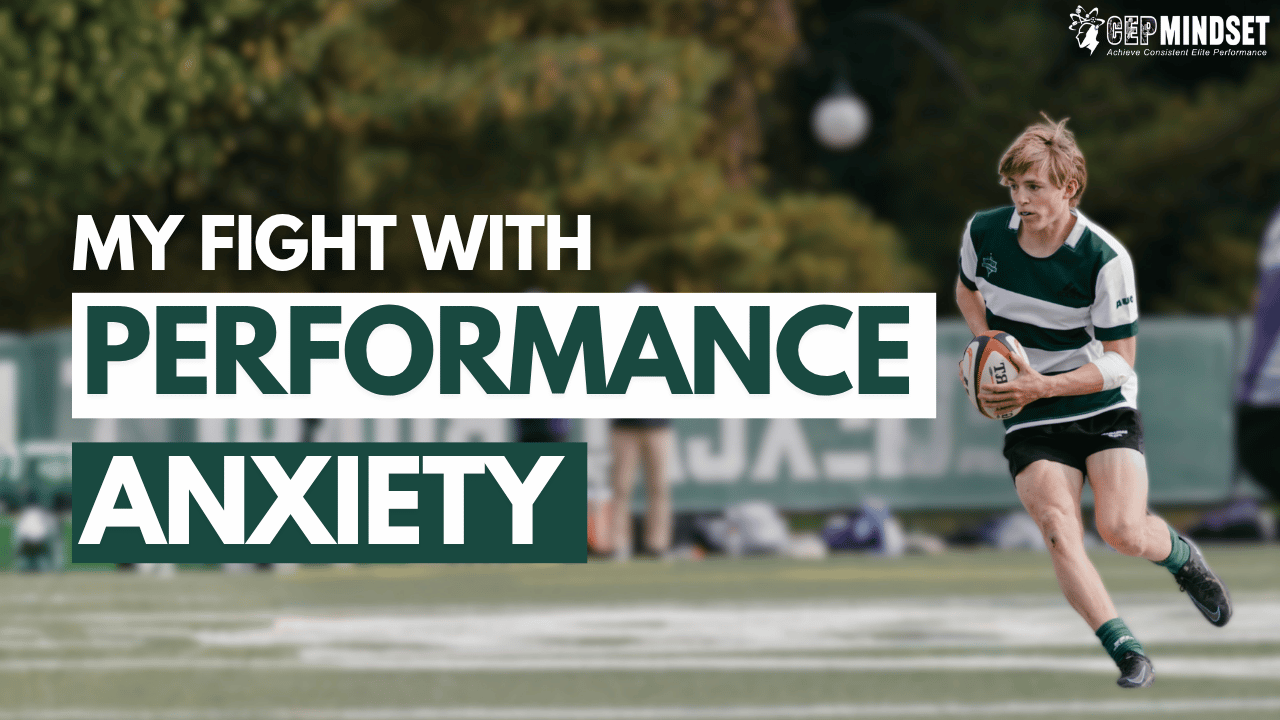

You’ve trained your entire life for this moment. It’s the end of the game. The crowd is watching, waiting for you to leave your mark.
But at this moment, it’s the last place you want to be. You believe that one mistake, turnover, or missed opportunity could ruin everything.
The fear of humiliation, let alone when it actually happens, can diminish your confidence, and even worse, your whole identity as a person.
Sport has the power to uplift, inspire, and bring out the best in athletes. It teaches many desirable characteristics, such as discipline, resilience, and teamwork.
But beneath the surface, sport can also expose something else.
Something that can be incredibly challenging to face: vulnerability.
The very thing that drives athletes to perform at their highest level can also put their mental health and self-worth at risk.
In sport, we’re often taught to “tough it out”, to perform through pressure, and to silence self-doubt.
But what happens when that doubt becomes the loudest voice in the room?
When your sport, the thing you’ve built your identity and worth around, starts to feel like the very place where your deepest insecurities are exposed.
Here are a few of the most common insecurities that have been uncovered from my own experience in sport and in my work with athletes.
When Sport Becomes Who You Are
A stretch of poor performances, missed opportunities, or rising expectations can spark a downward spiral – one where you start questioning your ability, your value, and even who you are.
For many, their sport isn’t just something they do; it’s who they are. An athlete can have a sense of self that revolves entirely around playing their sport.
So when execution fails, the effects cut deeper than the scoreboard.
A bad game can feel like a bad self. And when this happens over and over again, anxiety, self-doubt, and even depression could follow.
That’s the dangerous loop about performance and well-being; they are deeply connected.
Poor performance negatively impacts mental health, and poor mental health continues to erode performance.
A cycle that feels inescapable.
The Fear That Holds Athletes Back
When stuck in this cycle, athletes may begin to play with fear.
Most commonly: a fear of making mistakes, letting others down, or proving the negative voice in their head right.
This fear shifts everything.
Instead of playing to win, they may play cautious, tentative, and far below their potential.
They play not to lose.
It’s like playing under a spotlight where every flaw feels magnified.
Over time, the sport they once loved becomes a place of distress instead of fulfillment and enjoyment.
The result? Athletes feeling like they aren’t enough.
And when combined with an identity that is entirely tied to performance, the emotions that follow are heavy: inadequacy, shame, guilt, embarrassment, resentment, or worthlessness.
How to Work With Vulnerability
So how do we work with vulnerability instead of against it?
First, recognize it. Vulnerability isn’t a flaw – it’s a signal. A sign that something needs attention, support, and care.
If athletes are taught to see it only as a weakness, they’ll keep suffering in silence. But if we shift the culture, vulnerability can become the entry point for resilience, connection, and growth.
Caring deeply about your sport doesn’t have to cost you your well-being.
The emotional part of sport is a completely normal experience; it’s a part of being a human.
And it’s a place where one can develop resilience and perseverance through adversity and struggle.
Mental performance and mental health are not separate – they are intertwined.
But you can separate your performance from your worth. That’s the shift athletes need.
How We Build a Healthier Sport Culture
-
Build a healthy relationship with the game. Many of the challenges athletes experience with sports is because they develop an unhealthy relationship with the results, let alone the game. Being intentional with this relationship is key to optimizing your mindset, managing emotions, and building a healthier sport culture.
-
Normalize vulnerability. Catch people being vulnerable and praise it. See moments when someone wants to be vulnerable and encourage it. And most of all, lead by example. It’s okay to be vulnerable, that’s how we grow.
-
Share your story. Most of social media is consumed in highlights of others lives. Rarely do we see their struggles. Talk to others about the real life stuff, not the social media version of your life. Share your struggles, setbacks, and disappointments, as well as how you got through them. Create a safe space to share. Model vulnerability for others.
-
Encourage real talk. Check in with others, ask them how they are doing. Ask about a time they got themselves through something hard. Don’t settle for superficial conversations, get curious, and encourage others to go deeper.
-
Reach out for help. If you don’t feel comfortable having those difficult conversations with others or you feel you could benefit from connecting with a trained professional — then reach out to a mental performance coach or counsellor that seems like the right fit for you.
Building a healthy mindset can help achieve better results; but more importantly, it’s about helping athletes feel safe, confident, and joy, both in and out of sport.
High performance sports can be emotionally draining, and when you bear the weight of these feelings yourself — the weight can be too heavy to carry. But when we embrace our humanity and share our vulnerability then we find a greater inner strength through connection with others.
This blog was written by Coach Luciano.

 Blair has over 13 years of experience as a Professional Dancer, Assistant Dance Captain & Cast Manager, as well as an additional 17 years of training. Over the last 3 decades, she has lived and experienced first hand the highest of highs & lowest of lows that come with pursuing a career in the Performing Arts.


 As a former member of McMaster University’s women’s soccer team, Emilie intimately understands the demands and challenges athletes face on and off the field. Although she encountered many challenges as a high-level athlete, particularly struggling with self-doubt and overthinking, Emilie was able to make a remarkable transformation when she began to embrace the principles of sports psychology.








 Danielle Hanus, MA
 Monica Russell, MA