
We all know the intense feeling of being overcome with emotions. As athletes we develop in-the-moment strategies to deal with emotions while competing such as breathwork, or as we love to use at CEP, the Reset Routine.
But what happens when these emotions feel too big?
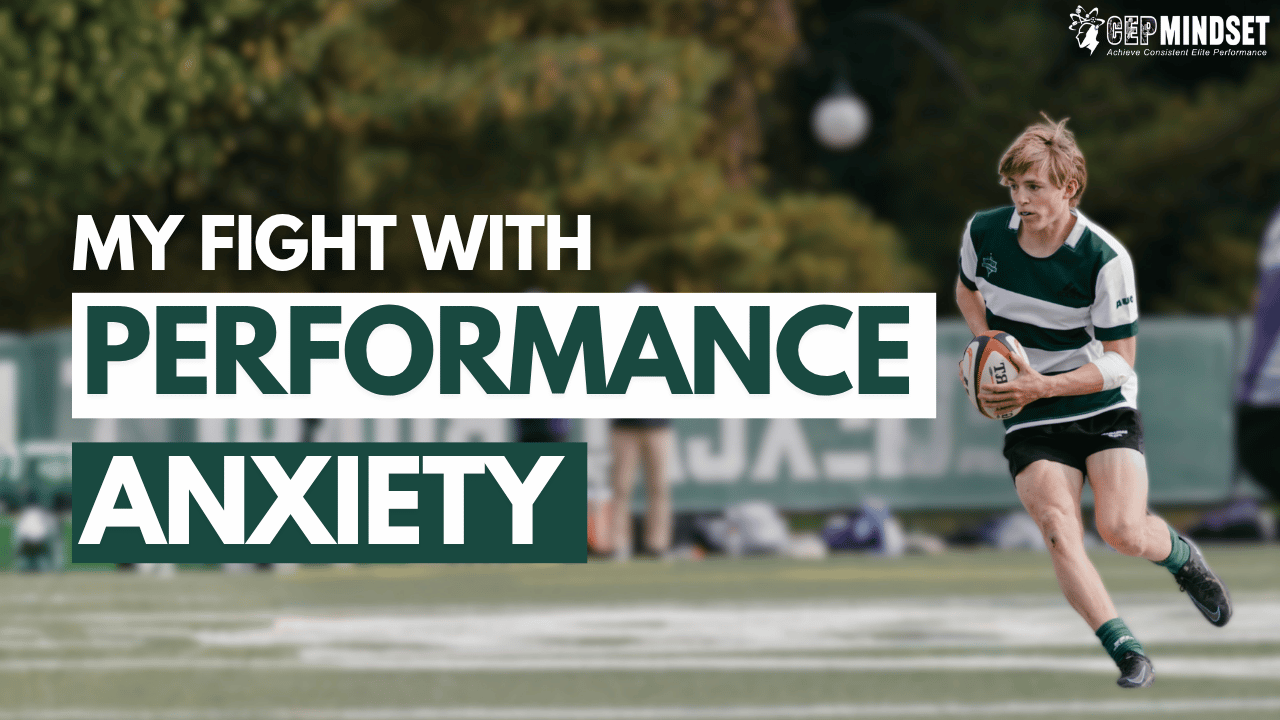
Take for instance the feeling of anxiety before a big competition. Maybe it’s the night before a career defining competition – anxiety takes over. You lay down to go to sleep and the overthinking starts; every worst case scenario running through your mind. You utilize breathwork and attempt to redirect your thoughts, telling yourself, just stop worrying about it…no such luck.
When I work with athletes experiencing these overwhelming emotions I take them through a 4-step process to help manage their emotions. It doesn’t mean we stop feeling these emotions entirely, but we allow ourselves the chance to alter the intensity and duration in which we feel them. By doing so, we may still feel some nerves about our upcoming competition (this is a good thing), but we’re able to carry on with our day, or get that good night of sleep to set ourselves up to perform at our best. These techniques have been partially adapted from Dr. Ethan Kross’ novel Shift and his research at University of Michigan, and can be applied to athletes at every level.
Step 1: Name It to Tame it
The first step in being able to tame our emotions is to label them. By simply applying a label to our emotions we are able to begin distancing ourselves from them. When you label your emotions, try using distancing language by acknowledging that our emotions are something we experience, not a part of ourselves. For example, instead of saying “I’m anxious” try “I’m experiencing anxiety right now”, or “I’m feeling anxious about my upcoming competition”.
Step 2: Be A Scientist
Scientists utilize reason and logic to question why and how something happens. Ask yourself why you are feeling this emotion. Even emotions such as anxiety, which we often label as “bad”, serve a valuable purpose in our lives. By being a scientist and trying to figure out why we feel a certain way, we can begin to accept these emotions and develop self compassion instead of beating ourselves up for feeling them. See more on the blog on how judging your emotions is a dead-end trap!
An emotion such as anxiety is a way of our brains to sound an alarm, telling us to pay attention to something because it’s important. The reason you may feel anxious about an upcoming competition is because you care about it; you’ve put a lot of work into preparing and you want to be able to perform your best – that’s a good thing! We can accept that we feel anxious and understand why we feel that way. By thinking as a scientist we can understand that it is normal to feel anxious before an athletic event, but we can also recognize that this is not the life-or-death experience it can sometimes feel like.
Step 3: Mental Time Traveling
One way to keep perspective when emotions feel overwhelming is to look at the situation from a different perspective — even a different time.
Time-travel to the past: Ask yourself; have I felt this way about events in the past? Have I experienced and overcome challenges such as this before? Chances are you’ve survived 100% of the emotional experiences you’ve experienced. Reflecting on past successes is a great way to build confidence.
Time-travel to the future: Ask yourself; how will I feel about this in a day, week, month, or even a year? What perspective would I have then? For myself, I recognize that no matter the results of the competition, by the next day I can see that it wasn’t the big deal I made it out to be, and that I can take whatever lessons I learned from it and move on.
Experiencing a bigger emotional experience? Time travel further. Recently I asked an athlete experiencing an injury: How are you going to feel about this a year from now? She responded that she will be really proud of the work she put in to come back stronger, and be able to see that overcoming this challenge made her a better athlete. She even reflected on how in the past she’s overcome injury before, and was successful in coming back stronger.
Step 4: Create Space Using Self-Talk
Finally, it’s time to talk yourself through your emotions and the challenges you may be experiencing. Use the following two approaches to create space — or better yet, by combining the two.
Third Person Self-Talk: To continue distancing yourself from the intense emotion, try using third person talk. We often see problems more clearly when we give advice to others rather than ourselves. By talking to ourselves in third person, we feel more removed from the intense emotional experience and can see our problems clearly. Think to yourself; what would I tell a friend going through this experience?
Journal Your Thoughts: Continue to think like a scientist and journal your thoughts. You wouldn’t try to solve a complicated math problem in your head, so why would you attempt to process a complex emotion? When you write something down you are forced to organize and understand your thoughts. Double-up strategies and shift your perspective even further by writing in third person.
For example, I can write down advice for myself: Erin, you have prepared for this competition and you know how to push and get the most of yourself in a race. You are capable of responding to whatever challenges might arrive. Regardless of the result, you can be proud of the work you’ve put in and learn something that will help you in your next competition.
Give these 4 steps a try next time you’re experiencing an overwhelming emotion and take back control over your thoughts and feelings. Here is a short summary:
Name the Feeling: Acknowledge it, give it name, and understand that feeling this emotion is normal.
Be Curious like a Scientist: Don’t judge yourself for having emotions instead, work to understand the root of them and learn something about yourself.
Use Time Travel: Gain perspective by going back in time and remember previous experiences of overcoming similar feelings and challenges. Take the point-of-view of your future-self to gain perspective on what really matters.
Create Space to Process: Talk to yourself in third person and use a journal to further understand and separate yourself from the emotion.
These steps will help you navigate complex feelings, regulate your emotions, and optimize your ability to take on your upcoming challenge.
This blog was written by Coach Erin.

 Blair has over 13 years of experience as a Professional Dancer, Assistant Dance Captain & Cast Manager, as well as an additional 17 years of training. Over the last 3 decades, she has lived and experienced first hand the highest of highs & lowest of lows that come with pursuing a career in the Performing Arts.


 As a former member of McMaster University’s women’s soccer team, Emilie intimately understands the demands and challenges athletes face on and off the field. Although she encountered many challenges as a high-level athlete, particularly struggling with self-doubt and overthinking, Emilie was able to make a remarkable transformation when she began to embrace the principles of sports psychology.








 Danielle Hanus, MA
 Monica Russell, MA