You know that feeling when you’re on a long trip and you keep asking your parents, “Are we there yet?” and every minute feels like 1 hour?
That’s the same feeling when you’re waiting for an email or phone call to let you know if you’ve made the team.
You put it all out on the ice, court, or field, you showed up and did your best, and now the rest is out of your hands. It’s a mixture of excitement and anxiety.
You feel confident. Hopeful. Like you’ve earned it!
And then the email or a call comes…
You didn’t make it.
You’re cut.
It hits you like a punch to the gut. You can’t breathe. You feel crushed.
But you are not alone, almost every athlete has felt this way, it’s part of the journey. And believe it or not, this moment – the one that sucks – can actually help you grow.
What matters is what you do next.
Let’s walk through how to handle this in a way that builds you, not breaks you.
The Struggle
Unfortunately, as humans, rejection strikes a deep chord because it goes against our basic needs to feel accepted, valued, and worthy.
“I suck!”
“Should I even play?”
“What’s the point? No one will want me now…”
Instantly, you forget all the work you put in. All you think about are the little mistakes you remember making.
You feel angry, embarrassed, disappointed, and worried about what comes next.
You feel stuck. Not sure what you can do. It is easy to get stuck in the past. What could you have done better? It’s easy to get stuck thinking about the future and where you need to go next, but in reality, you have to bring everything back to the present.
Bringing It Back to the Present
Step 1. Feel It, then Reframe It
Getting cut hurts. It’s important not to skip this part or to stay in it for too long.
One of the best ways to describe this is going through “Suckville”, which I came across while reading the book “Suckville” by Bhrett McCabe. Every athlete will travel through “Suckville” during their athletic journey.
There is no way around it.
Recognize it is happening, and once you have allowed yourself to feel the emotions, you want to change the story around it.
You want to reframe the meaning—your self-talk matters.
Instead of “I am not good enough”, try:
“I know I can grow and learn from this.”
“I did not make it this time, but I’m not done; it’s part of the journey.”
“I can come out stronger on the other side of ‘Suckville.’ I just need to keep my foot on the pedal and drive through.”
Reframing is not pretending – It’s choosing a story that keeps you strong and moving in the right direction.
Step 2. Separate Identity from Outcome – Zoom Out
You did not make the team. It does not mean you are a failure. It does not mean that your career is over.
It’s hard to recognize that in your career there will be some hard times, some fun times, some easier times, some times that suck, but nothing is a linear path.
Most of us think that our progress in our careers should look like this:
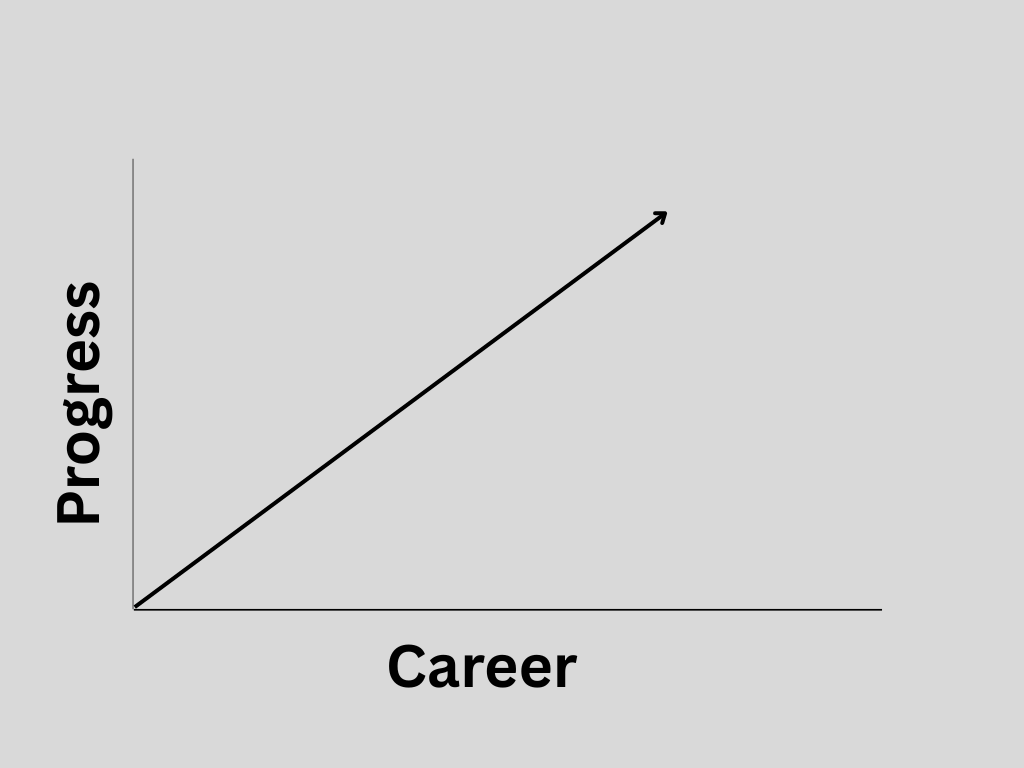
But in reality, looks like this:
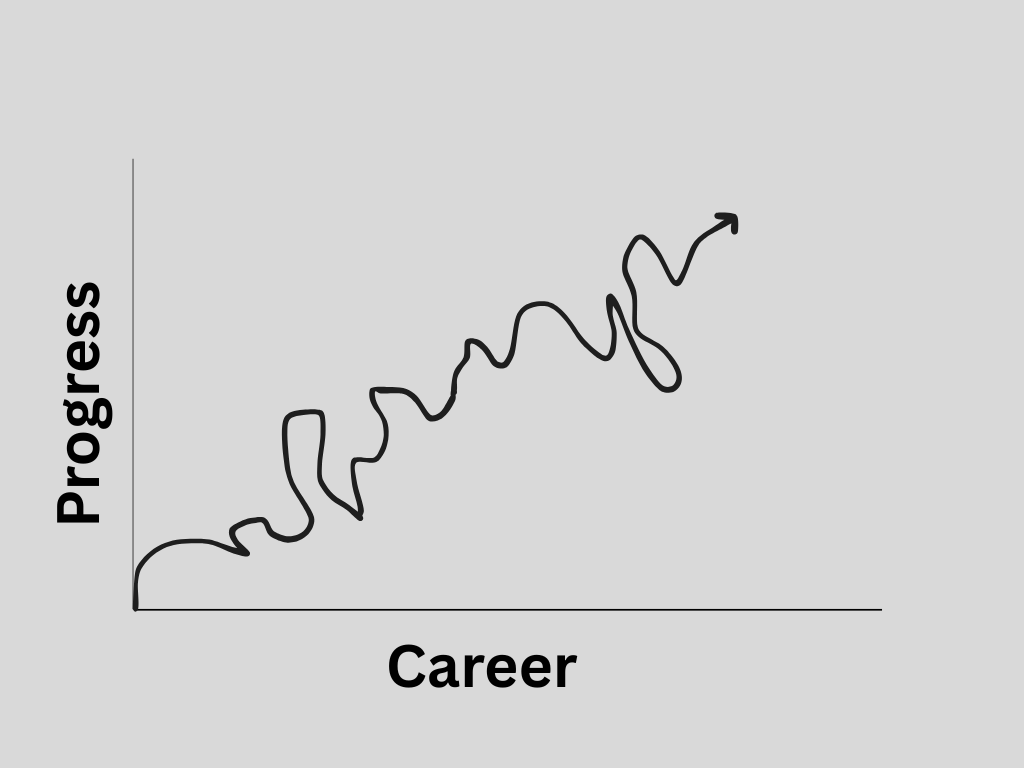
The low points are not detours or barriers; they are part of the map, part of the journey. Not making the team or getting cut might feel like the end, but it’s not. When you zoom out, you can see that they are part of the journey, one chapter in the story that is being written in your career.
Every dip can sharpen your mindset.
Every slow stretch can reveal what really matters to you.
Every challenge builds skills that you’ll use later, even if you don’t see it yet.
Progress is not a straight line; it’s a series of dips, plateaus, and leaps. When you zoom out, you can start understanding that you are still moving forward.
So next time, you are in a dip, instead of asking yourself, “Why is this happening to me?” ask yourself this:
“What is this teaching me?”
“Why is this happening for me?”
“How will it help me move forward?”
Step 3: Learn From It – It’s Feedback
Like when you take a test in class and get a grade, you get feedback on what you know and what you don’t know. Once you get that feedback, you know what you must keep learning and where to direct your focus. It’s the same thing when you get cut or don’t make the team; it’s feedback.
As an athlete, being able to live in those frustrating times of where you are and where you want to be is so important. That is part of every athlete’s journey. In that space is where growth happens.
And if you are someone who has goals and dreams, you have to learn to embrace that space, seek it out, even because it will never go away.
There are 4 anchors to performance that you can reflect on. All of which are in your control. The key is reflecting on what you had control over, not what was out of your control.
The 4 anchors are Physical, Mental, Tactical/Technical, and Social. Here are some example questions to reflect on:
- Physical Anchor
“Did I eat well?”
“Was I hydrated?”
“Was my body strong and conditioned well?” - Mindset Anchor
“Did I have a good attitude?”
“Was I focused on what I can control?”
“Was I able to respond well to my mistakes?” - Tactical/Technical Anchor
“How was my speed?”
“Did I execute what was asked of me?”
“Did I prepare well enough with skill development?” - Social Anchor
“Did I take feedback well?”
“Did I respond well to the environment?”
“Was I supportive of the other players around me?”
When we reflect, we tend to be either too hard or too easy on ourselves. The goal is to be as accurate as possible.
Embrace the space of frustration.
Take the time to review the questions above.
Write down your answers.
Be clear on what you have learned.
Step 4. Reconnect to Your Why
When you have setbacks and dips, it’s easy to feel disconnected from why you are doing this in the first place. You forget the reasons why this sport has brought you so much joy and happiness. Some of the most common statements I hear athletes say in these times are:
“Why even keep doing this, I suck.”
“Maybe I’m just not cut out for this.”
“What’s the point if I keep being overlooked?”
These are not questions or thoughts that will serve you.
Instead, it is essential to stay connected to the love of the game — so take some time to reflect on why you play in the first place.
Is there a feeling you experience when you are in the flow?
Is it the challenge of pushing yourself and mastering your skills?
Are the connections with your teammates, coaches, or parents important to you?
It’s common to lose touch with these feelings, especially when we’re chasing results. The Flower Bed Story does a great job illustrating this common experience.
When we lose the connection to the love of the game, it feels like the fire insides dwindles.
To counteract that, one of the strategies we encourage is visualizing yourself back when you first fell in love with your sport as part of your daily mental preparation.
Thinking back to when you were playing as a kid can help reignite your fire and makes sure that it keeps burning strongly.
A great example of this comes from the Welcome to Wrexham documentary. Before the game that could secure the team’s third straight promotion (a feat no professional soccer team has ever accomplished before), the owner gathered the players and asked them to reconnect with why they fell in love with the game.
The owner said, “you have trained like men, now it’s time to go play like you are 10”. He had them visualize what it felt like when they first started playing: where they were, the joy they felt, and how much fun the game used to be. The result? The team dominated the game, made history, and truly enjoyed the moment. Here’s a short clip of the owner describing that moment.
Step 5. Fuel the Fire, Not the Doubt
In reality, there are 2 ways to approach being cut.
You can allow it to deflate you, let the doubt creep in, or use it as fuel.
There was once a study that was done where scientists tried to grow trees in a dome, where there was the perfect environment. Ideal temperature and soil.
As you can imagine, the trees grew fast and looked healthy, but something strange started happening. Once the trees all hit a certain height, they would fall.
The scientists quickly realized what the problem was.
There was no wind. Without wind pushing against them as they grew, the trees never developed strong roots. No resistance meant no stability.
Just like those trees in the dome, it’s easy to want perfect conditions, no setbacks, no criticism, no failure. But it’s actually the resistance that builds our strength. The wind, the pushback, the challenges, those are what help our roots grow deeper.
When you hit a setback, you can either feed the doubt — “I’m not good enough.”
Or fuel the fire — “This is what’s going to make me stronger.”
The trees didn’t fail because they were weak; they failed because they were never tested.
You’re being tested, and that’s what’s building the foundation you’ll need to go further.
Come out Stronger on the Other Side
It’s not about what happens to us that matters, but it’s how we respond.
This might be clichéd, but the fact is that clichés are often true.
The amazing thing about this is that you are learning and growing through setbacks that you have chosen to experience. You are choosing to play your sport. For most people, the pain and the growth might come from something they have not chosen. Things that simply happen to them that they don’t want.
You are learning lessons and growing in life by doing something that you love. The most difficult, but powerful approach is to sprinkle in some gratitude and appreciation.
This mindset will help you embrace the struggles of sport and life, and can provide you with the opportunity to build some resilience for your future self.
You’re not falling behind or moving backwards. You are developing grit — which might be one of the most important skills in sport, let alone life.
This blog was written by Coach Sara.
 Blair has over 13 years of experience as a Professional Dancer, Assistant Dance Captain & Cast Manager, as well as an additional 17 years of training. Over the last 3 decades, she has lived and experienced first hand the highest of highs & lowest of lows that come with pursuing a career in the Performing Arts.



 As a former member of McMaster University’s women’s soccer team, Emilie intimately understands the demands and challenges athletes face on and off the field. Although she encountered many challenges as a high-level athlete, particularly struggling with self-doubt and overthinking, Emilie was able to make a remarkable transformation when she began to embrace the principles of sports psychology.








 Danielle Hanus, MA
 Monica Russell, MA