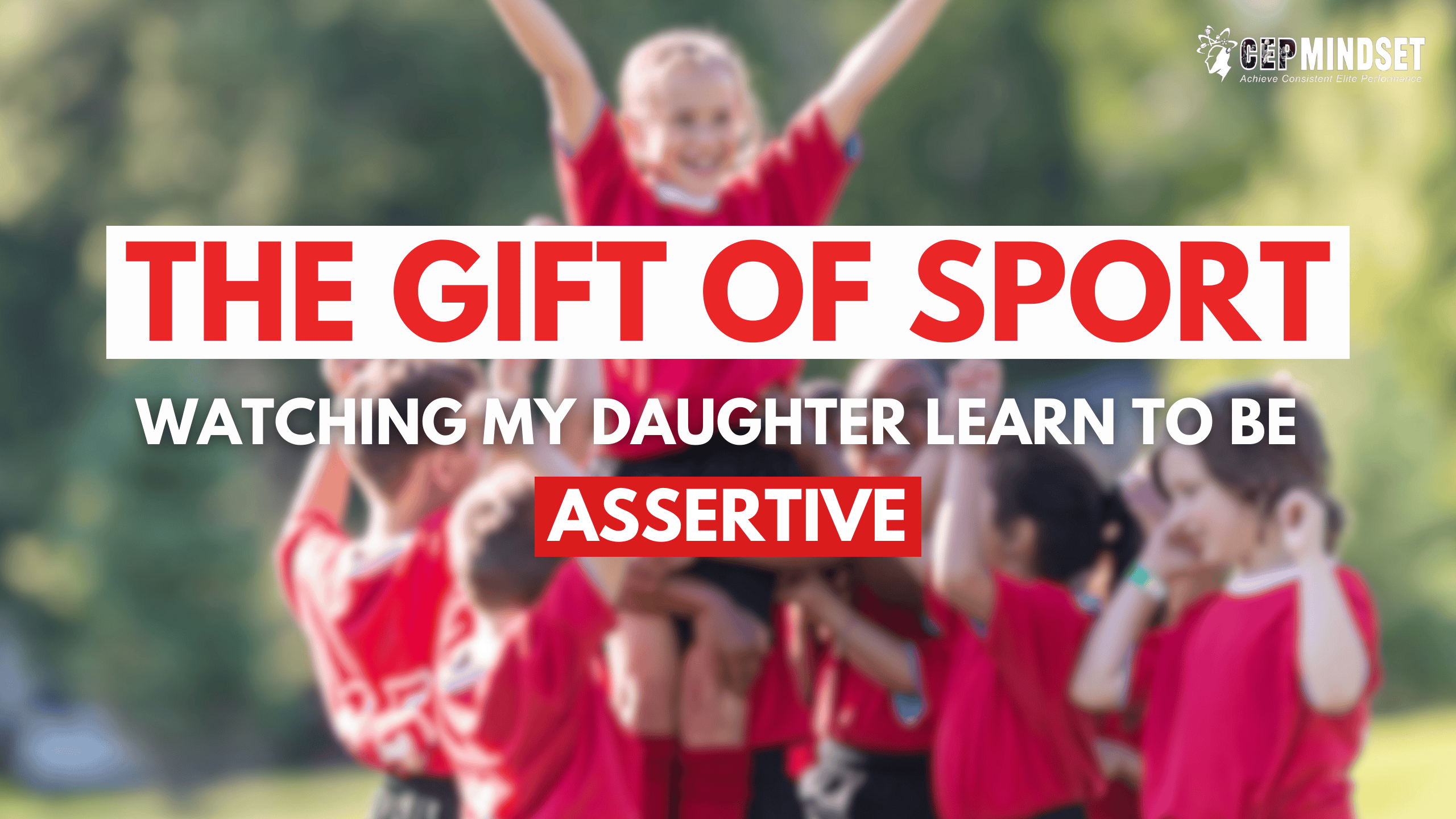
The first time my six-year-old daughter, Addie, stepped onto a soccer field, she didn’t chase the ball—she circled it. She had the speed to keep up, but not the grit to dive in. From the sidelines, I wrestled with a familiar parenting dilemma: should I step in and try to make her “better” at soccer, or let this be an opportunity for her to learn something bigger?
That moment became the theme of Addie’s first season of 4v4 girls’ soccer. Our caring, big-feelings, intelligent little girl wasn’t exactly bursting with toughness or assertiveness on the field. She had all the physical tools—she’s big and fast for her age—but when it came to fighting for possession or taking a loose ball to the net, she hesitated.
As parents who grew up competing in high-level sports and playing varsity athletics, my wife and I couldn’t help but grimace at times. Every missed chance tugged at us. Still, we knew we couldn’t force her to develop a “killer instinct.” Especially when her younger sister—two years her junior—was storming through her own rec league, stealing the ball and practically scoring at will. The contrast couldn’t have been more obvious.
Quietly, we started to accept: maybe assertive team sports just weren’t Addie’s thing.
Different Lens
But here’s the thing—I’m a Mental Performance Coach. And I’ve always believed that the real purpose of sport isn’t medals or trophies. It’s the life skills our kids pick up along the way.
So, instead of worrying about how Addie stacked up on the field, I began looking at this season as a chance for her to practice toughness and assertiveness—on her terms.
At first, we talked about what those traits actually mean. Then we looked for tiny moments when she showed them, celebrating even the smallest flicker. And maybe the hardest part for me? Biting my tongue. Resisting the urge to tell her she was improving. Instead, I encouraged her to notice those moments for herself.
Turning Point
One night, everything came spilling out.
Addie told me she was tired of being the worst player. She wanted to score. She knew that meant she had to be more assertive.
But then her little heart poured out the other side of the conflict: she worried that if she took the ball, her teammates would be upset with her. And if she scored, even the opponents might not like her for it.
That’s Addie. Big emotions. Deep empathy. And only six years old.
But it was a breakthrough. She was beginning to see two important truths:
- It’s just a game—everyone’s out there to play and to win.
- Being assertive doesn’t mean being mean; it’s a strength you can use to reach your goals.
The Shift
From then on, we started to notice little shifts. Each week, she had moments where she leaned in—played with a touch more fire, a touch more confidence.
And then came the final game of the season. The score was tied. The clock was winding down. Out of nowhere, Addie scooped up a loose ball, charged toward the net, and unleashed her best strike of the year—just one clean shot away from her very first goal, and in the most dramatic fashion possible.
The goalie made the save. But the result didn’t matter.
What mattered was the look on Addie’s face: she wasn’t worried about failing. She wasn’t worried about what anyone thought. She was having fun. She was engaged. She wanted to be out there.
What I’ll Remember
Will Addie ever be the most naturally assertive player on the team? Maybe… But probably not. And that’s okay.
What matters is that she’s learning to step into that quality when she needs it. To know it’s there, waiting inside her, for the moments that call for it—on the field, and far beyond it.
That’s the gift of sport. It’s not really about the goals, saves, or medals. It’s about giving our kids a safe place to practice traits like resilience, composure, and assertiveness—so that when life demands them, they’re ready.
Over time, they build up proof—little stacks of evidence—that they can take on challenges and come out stronger. That’s how we grow not just confident athletes, but confident people.
For me, Addie’s first soccer season will always be a reminder of this:
It doesn’t matter what your natural tendencies are. Every child—and every adult—can develop the skills and traits they need to be confident in themselves and ready for life’s challenges.
And what better place to practice those lessons than through the simple, beautiful thing we call sports?
This blog was written by Coach Cassidy.
 Blair has over 13 years of experience as a Professional Dancer, Assistant Dance Captain & Cast Manager, as well as an additional 17 years of training. Over the last 3 decades, she has lived and experienced first hand the highest of highs & lowest of lows that come with pursuing a career in the Performing Arts.


 As a former member of McMaster University’s women’s soccer team, Emilie intimately understands the demands and challenges athletes face on and off the field. Although she encountered many challenges as a high-level athlete, particularly struggling with self-doubt and overthinking, Emilie was able to make a remarkable transformation when she began to embrace the principles of sports psychology.








 Danielle Hanus, MA
 Monica Russell, MA