There’s been a theme in recent conversations I’ve had with athletes. In big moments they feel the need to bring as much intensity as possible.
We hear it all the time, phrases like…
Go all out. Push harder. Leave it all out there.
But too much of a good thing is a bad thing.
Imagine yourself in a competitive team sport. Over the last year, you’ve continued to face the same highly ranked opponent. Before you even start the tournament, you’re thinking about when you’ll face them in the bracket and what happens if you lose. You feel nerves, pressure, and a huge competitive push to win.
- Nerves → trying too hard, not staying calm
- Pressure → overthinking, scared to mess up
- High expectations → not accepting mistakes, frustration with your partner
Let’s imagine another scenario… you’ve been competing all day and you’re heading into the finals. Your mindset throughout the day has only intensified because the dream result is getting closer.
- Bigger game → more fired up, fearful of losing
- Not the strong start you wanted → forcing things
- Excited to play → fear of embarrassment or disappointment
What both these examples have in common is the belief that maximum intensity = maximum performance.
It makes sense because if the moment matters more, it can feel like you need to do more. But there’s a difference that athletes (and sometimes even coaches) lose sight of in the heat of the moment – 100% effort is not the same as competing at 100% intensity.
Sometimes trying to do more actually pulls you further away from your best.
Find Your Sweet Spot
Think about competitive intensity like a dial.
At one end, you might be too relaxed or disengaged. At the other, you might be too fired up, emotional, or even overwhelmed.
To really find your sweet spot, I want you to reflect on your best performance over the last month or last season. How did you feel?
- Aggressive but controlled?
- Excited but composed?
- Focused but loose?
- Competitive but in the moment?
Try to score your competitive intensity on a scale from 0-100%. Where were you?
Maybe your best performance feels like 70% intensity. Maybe it’s closer to 85%. Remember, there’s no perfect number for every athlete. Find your sweet spot.
What Is Pushing Too Far?
Now, think back to a recent practice or performance where maybe you “wanted it too bad.” Where were you then? Remember the two examples earlier on facing a tough rival opponent or heading into finals, it’s easy to jump from your best at 75% to 95%.
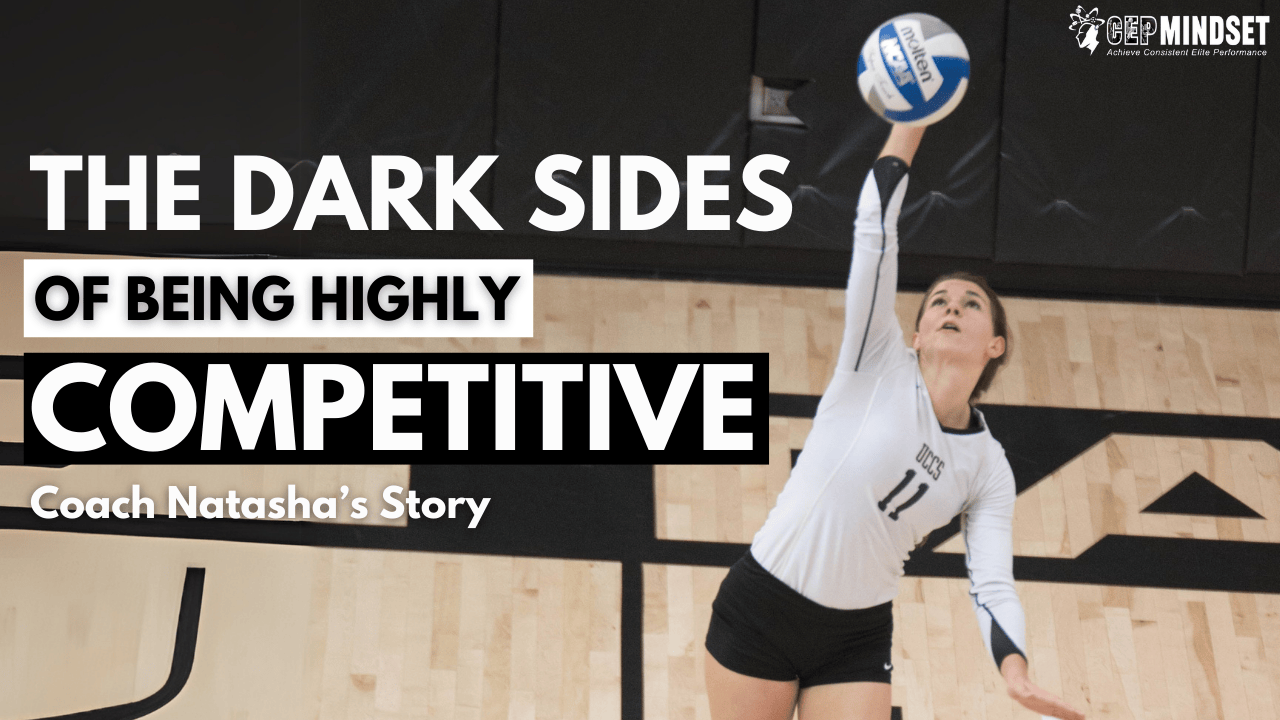
I know for me, when I wanted it too bad, I would be all over the place. I played competitive volleyball and especially in college, I’d overadjust…
My timing by rushing movements…
My typical decision making by trying to create big plays…
My aggressiveness by stepping in front of teammates…
My focus by only thinking about winning or losing points…
Too much intensity leads to rushed, forced, and risky decision making.
Now, I want you to think more specifically about the element of physicality / aggressiveness in sport. We have a concept that really clicks for athletes called our 3/4 Attack Mindset. Imagine playing aggressive on a scale from 1–5:
1 = scared / too safe
2 = little safe
3 = controlled / aggressive
4 = little risky
5 = reckless / too risky
You don’t want to play scared, but you also don’t want to force everything. The goal is finding the 3/4 Attack Mindset zone: taking some risks, striving for impact, and being aggressive while still staying in control.
Turn the Dial Back to Optimal
So, once you notice you’re outside your ideal zone, we’ve established that the goal isn’t to completely change how you’re playing.
Sometimes you just need to turn down the dial a little bit.
There are many different strategies to commit back to your best self:
- Zooming Out – keeping perspective, only one mistake, not the end of the world, etc.
- Deep Breath – slowing your mind and body down
- Humor – loosening up and reconnecting with your teammates or having fun
- Body language – shaking it out or tensing and releasing muscles to relax
- Focus words – using cues like: steady, loose, controlled
I don’t want you to get the wrong idea that dialing it down means you care less or aren’t trying hard enough anymore. It’s just about getting you back to your sweet spot.
A Balancing Act
There’s a balance when performing at your best. You can be completely committed to competing while still feeling calm, loose, and controlled.
An important call out is the feeling X but Y, for example, aggressive but controlled.
I want you to walk away with this takeaway to reflect more on. As long as you can identify your sweet spot, recognize when you’re pushing too hard, and know how to dial it down, those big competitive moments won’t be a huge obstacle anymore.
This blog was written by Coach Natasha.

 Blair has over 13 years of experience as a Professional Dancer, Assistant Dance Captain & Cast Manager, as well as an additional 17 years of training. Over the last 3 decades, she has lived and experienced first hand the highest of highs & lowest of lows that come with pursuing a career in the Performing Arts.


 As a former member of McMaster University’s women’s soccer team, Emilie intimately understands the demands and challenges athletes face on and off the field. Although she encountered many challenges as a high-level athlete, particularly struggling with self-doubt and overthinking, Emilie was able to make a remarkable transformation when she began to embrace the principles of sports psychology.








 Danielle Hanus, MA
 Monica Russell, MA