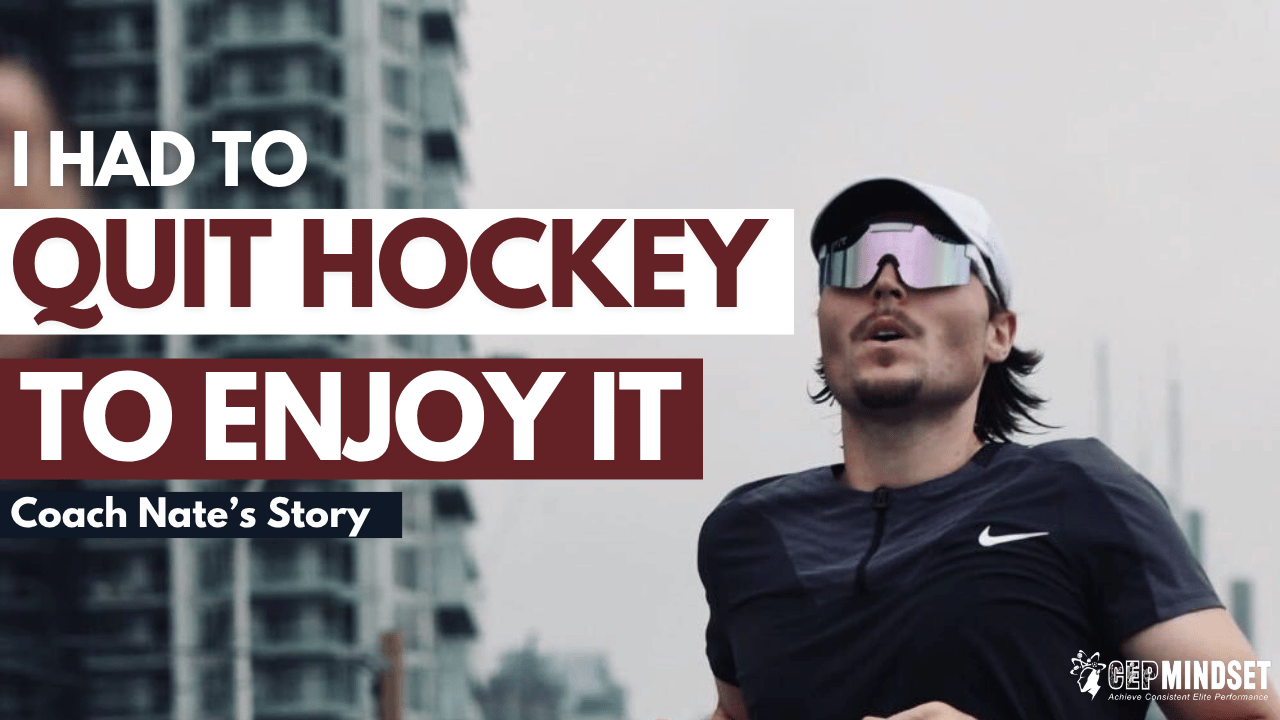
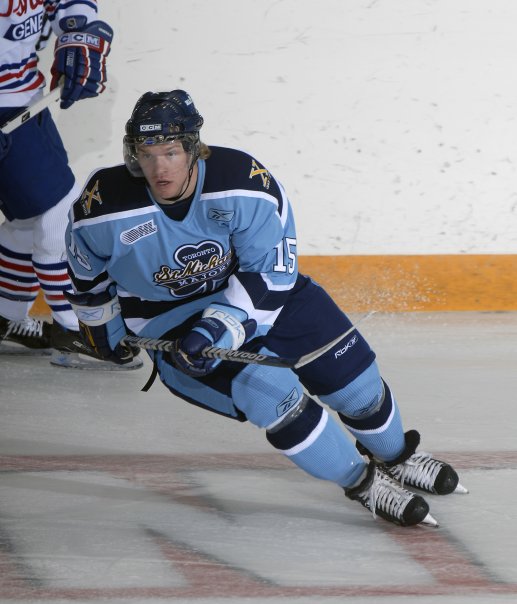
I still remember standing at center ice as the captain of my team accepting the OMHA championship trophy with my red hat on.
Everything had gone exactly according to plan.
We had won the championship. I wore the “C.” I had earned myself a spot at the next level for the following season. I felt like I was on top of the world.
That’s where I made my first mistake.
I was convinced that hard work had gotten me there, so naturally I believed the answer to every future challenge was simple:
Train harder than everyone else.
My Obsession With Hard Work
I became obsessed with physical preparation. I took extra skating sessions and always tried to hit my max lifts at the gym. I’d do hill sprints until my legs burned and stick handle every day in my basement.
If someone was doing ten reps, I did twelve. If a workout was optional, I was there. I convinced myself that if I could skate longer, lift more, and outwork everyone around me, I would achieve everything I wanted.
Then the next season started.
The team gathered in the dressing room before our first exhibition game. Our coach stood at the front with a handful of jerseys draped over his arm.
“This year’s captain is…”
My name wasn’t called.
The drive home was quiet. I stared out the passenger window replaying the moment over and over, wondering what I’d done wrong. For the first time, I questioned whether I was actually the player I thought I was.
That doubt followed me onto the ice.
The more I tried to prove I belonged, the tighter I played. My hands felt heavy. A game that had always felt instinctive became something I overthought.
Before long, my confidence was living and dying with every point on the scoresheet, and my identity followed close behind.
Losing Myself To Find My Game
By the end of the season, I had made up my mind.
I was done with hockey.
I packed up my hockey bag after our final game, carried it into the garage, and left it there. For weeks, I didn’t touch it. I avoided conversations about next season. Every time someone asked if I was excited to get back on the ice, I’d shrug and change the subject.
The game that had been my entire identity suddenly felt like the last place I wanted to be.
But as the months passed, something unexpected happened. I didn’t miss the pressure or proving myself.
I missed hockey.
I missed the rink and my teammates. I missed the feeling of a crisp pass landing on my tape. Somewhere beneath all the frustration, I realized the love I had for the game had never disappeared, it had just been buried under a season of self-doubt.
So I decided to come back.
One practice, after another frustrating stretch where nothing seemed to go right, my coach asked me to stay behind.
I assumed we were going to work on my shot or talk about my positioning.
Instead, he leaned against the boards and said,
“What’s going on?”
I shrugged.
“Nothing.”
He looked at me for a second before saying something I’ll never forget.
“Your emotions are controlling the way you play.”
He had nailed everything happening in my head.
Then he suggested something no coach had ever suggested before: learn how to manage your mind.
I wish I could tell you I listened, but I didn’t.
I walked out of the rink convinced he was wrong. In my mind, the solution was obvious. Train harder, so I added more workouts. More skating & shooting, so I added more ice-time.
I thought I was being productive, but nothing changed at my next game. I was still gripping my stick too tight, second-guessing every decision, and just trying to not make mistakes
The Questions That Changed My Career
I had a moment in the dressing room after the game when it finally hit me. My mind really was holding me back. It was in that moment that I stopped trying to outwork the problem and started trying to understand it.
That decision changed far more than my hockey career.
As I learned how to regulate my emotions and separate my identity from my performance, I started trusting myself again. I played with swagger. I started actually enjoying hockey again.
And I realized something I wish every athlete understood much earlier.
No amount of physical training could fix what’s happening inside my own head.
That realization forced me to start asking different questions. Why did some athletes thrive under pressure while I struggled? Why did my confidence and motivation disappear when things did not go my way? How could I be one of the most physically prepared athletes on the team, yet still watch others find greater success? More importantly, why had no one ever taught me the psychological skills that were just as important as the physical ones?
Those questions led me to study psychology.
I fell in love with sport psychology during my undergraduate degree and became fascinated by understanding how our thoughts, emotions, and behaviors influence performance.
Why I Do This Today
That passion eventually led me into research, mental performance coaching, and now my PhD, where I study the psychological factors that influence athlete well-being and performance.
Every project I work on comes back to one belief: The mind shapes how we perform, how we respond to adversity, and ultimately who we become as people and performers.
Today, I coach athletes because I’ve lived both sides of that journey.
I know what it’s like to believe that simply working harder is the only way to get better.
I know what it’s like to lose confidence, question your identity, and feel trapped by unrealistic expectations.
And I know what it’s like to discover that some of the biggest breakthroughs don’t come from training your body, they come from training your mind.
I don’t coach because I have all the answers. I coach because learning these skills fundamentally changed the way I viewed sport, competition, and myself.
Now my mission is to help athletes experience that same transformation, so they can stop fighting their own minds and start becoming the athlete they’re truly capable of being.
This blog was written by Coach Nate.
 Blair has over 13 years of experience as a Professional Dancer, Assistant Dance Captain & Cast Manager, as well as an additional 17 years of training. Over the last 3 decades, she has lived and experienced first hand the highest of highs & lowest of lows that come with pursuing a career in the Performing Arts.


 As a former member of McMaster University’s women’s soccer team, Emilie intimately understands the demands and challenges athletes face on and off the field. Although she encountered many challenges as a high-level athlete, particularly struggling with self-doubt and overthinking, Emilie was able to make a remarkable transformation when she began to embrace the principles of sports psychology.







 Danielle Hanus, MA
 Monica Russell, MA