
It’s Saturday, November 28th and my alarm goes off 4:30 a.m.
A cruel time of day if you ask me, but I have work to do.
I yawn as I pull on the leggings, sports bra, and long-sleeve shirt I laid out the night before.
In the kitchen, I toast a bagel. One last push to get a few more carbs in before the day really begins.
I put on my vest, headband, gloves, and headlamp, then drive to the trailhead.
When I pull up, it’s a few minutes before 6:00 a.m. It’s minus 5 degrees celsius outside and I can see my breath lingering in the cold air.
5…4…3…2…1.
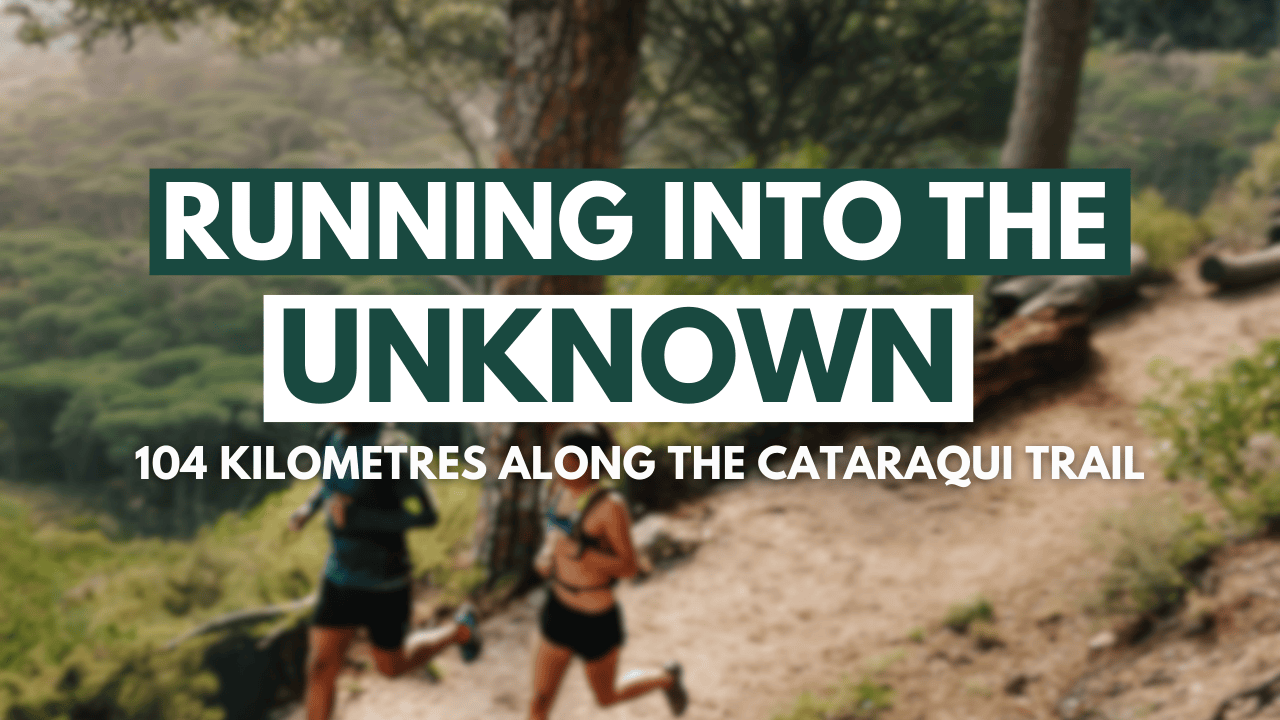
I start my watch for what I know will be an 8+ hour run — 104 kilometres along the Cataraqui Trail from just outside of Napanee to Smith Falls.
The goal on paper iis simple: to run the fastest known time ever recorded on this route.
The first 45 kilometres feel smooth. My legs are light, my breathing steady. I’m rolling at 4:46 min/km pace – exactly where I want to be. Everything feels easy.
Until it doesn’t.
It starts as a cramp. Annoying, but manageable.
Then the pain sharpens into something much worse. It feels like someone is stabbing a knife into my stomach over and over. I’m praying for it to stop but it doesn’t.
I look down at my watch and do the math. There’s no way I can run for another four hours in this amount of pain. Not a chance.
Then, before I can process what’s happening, I begin throwing up.
For a moment, I’m relieved. The pain eases.
But relief is quickly replaced by fear. Losing all my nutrition this early in the run is not ideal…
Still, I start moving again, putting one foot in front of the other.
Twenty kilometres later, I have a familiar, but unwelcome feeling. That sharp, stabbing pain is back.
I throw up again, this time with my tears in the mix. I desperately want to stop running. To make the pain go away.
The friend I’m running with at the time looks at me, smiling, like he knows something I don’t.
Then he says something I’ll never forget.
“In ultra marathons, your mind will go to some low and dark places. It doesn’t mean you’re done. It means you have to claw your way back.”
With those words hanging in the air, I nod my head and keep pushing forward.
By the 80-kilometre mark, my right calf begins cramping from the lack of fuel in my stomach.
I look at my watch. Two hours of running still to go.
Left foot.
Right foot.
Repeat.
104 kilometres and 8 hours, 28 minutes, and 58 seconds later, I finish what I started.
I’m in pain, out of breath, and on the edge of throwing up for the seventh time.
I bury my head in my hands, crying.
When I finally lift my head and look at my watch, I try to make sense of the numbers staring back at me. I had just broken the women’s fastest known time by over two and a half hours – and the men’s by 42 minutes.
I had also unofficially ran one of the fastest times across the 100-kilometre distance for Canadian women.
The magnitude of this accomplishment takes a few days to sink in. Not because of the numbers themselves, but because of what it took to get there. It’s easy to keep putting one foot in front of the other when everything is clicking. But when your body and mind are screaming at you to stop, continuing becomes less about fitness and more about character.
In the days and months since this effort, I’ve been left with a profound sense of gratitude. Gratitude for choosing to pursue a big, uncomfortable goal. And gratitude for finishing what I started, even when quitting would have been easier.
I spend a lot of time teaching my athletes how to stay composed, adaptable, and resilient under pressure.
On November 28th, I had to practice what I preach.
I had plenty of reasons to stop. Plenty of opportunities to quit when things got hard. But this run reminded me that resilience isn’t built when things go right, it’s revealed when they don’t.
Running 104 kilometres into the unknown didn’t just test my limits. It expanded them. It unlocked a deeper level of trust in my ability to stay present, problem-solve, and keep moving forward when certainty disappears.
And while the pain of that day has faded, what stays is the reminder that resilience comes from doing hard things – you can either avoid the discomfort or embrace it head on.
This blog was written by Coach Elaina.



 Blair has over 13 years of experience as a Professional Dancer, Assistant Dance Captain & Cast Manager, as well as an additional 17 years of training. Over the last 3 decades, she has lived and experienced first hand the highest of highs & lowest of lows that come with pursuing a career in the Performing Arts.





 As a former member of McMaster University’s women’s soccer team, Emilie intimately understands the demands and challenges athletes face on and off the field. Although she encountered many challenges as a high-level athlete, particularly struggling with self-doubt and overthinking, Emilie was able to make a remarkable transformation when she began to embrace the principles of sports psychology.









 Danielle Hanus, MA
 Monica Russell, MA







