I still remember the match that broke me.
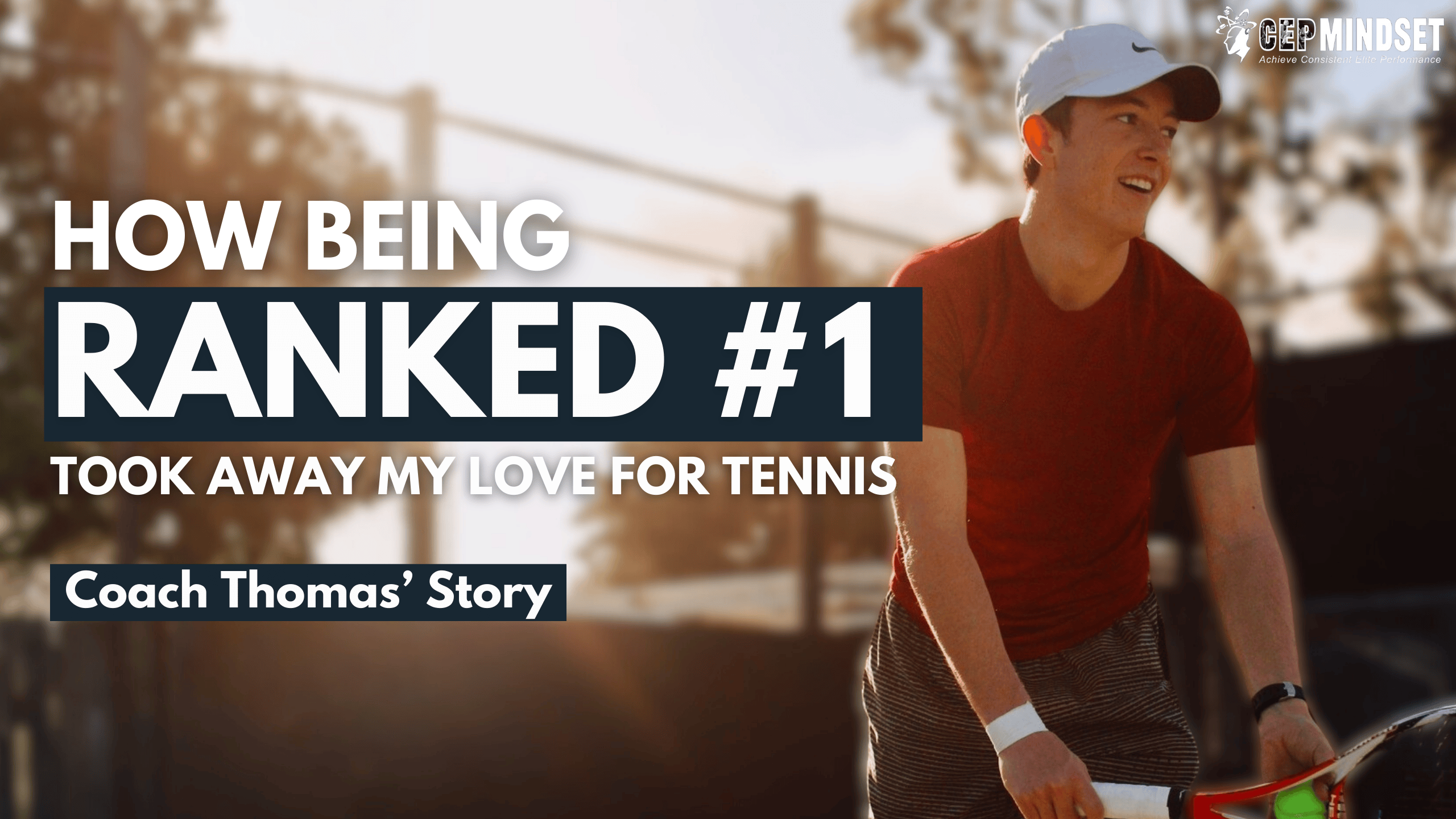
I was in middle school and playing in a semi-final tournament match against a friend of mine. He was ranked lower than me. I was “supposed” to win. After all, I was ranked #1 in the state.
I started off hot and wasn’t missing. I cruised to a first set victory.
As I sat on the bench waiting for the second set to begin, I started thinking to myself:
“What if I let this guy come back? What if he beats me? What if I let my parents and my coach down?”
This pressure was very familiar to me since earning the top rank in the state. I constantly felt like I had a target on my back. I felt anxious both on and off the court. I had a lot to lose all of a sudden.
Tennis used to be fun, but now it felt heavy.
As I stepped back on the court for the 2nd set, my thoughts continued to race. My legs felt rigid and my whole upper body was tight and tense.
I was panicking.
The Second Set
My opponent broke my serve in the first game of that set. Every unforced error I made suddenly felt like a spotlight exposing me. I couldn’t shake the tightness and turn the match around.
Meanwhile, my opponent never looked back.
I lost the match. I remember shaking my opponent’s hand and walking off the court. In that moment, my coach grabbed me. He reassured me that losing is unavoidable, that it’s part of the sport. But I didn’t listen.
I was defeated. The experience of that match was dreadful. And as I reflected, that was just how losing felt to me since earning the #1 rank.
Part of me wanted to continue playing – I felt like I had come so far. But another part of me wanted to just leave it all behind. Tennis no longer felt healthy for me. Why would I keep doing something I wasn’t enjoying?
Within a number of weeks, I decided that it was time for me to put down the tennis racket.
So, I stepped away from tennis. Not in flames, just in silence. I didn’t really open up to anyone about why I was quitting. I just told my parents and coach that I wanted to focus on other sports.
And that’s how it was for years. As my rackets collected dust in my closet, I played other sports: baseball, soccer, golf, and basketball.
It felt comfortable to leave my rackets tucked away. It was easier to just avoid the tennis court. It was convenient.
But somewhere beneath all of that, I felt like I had unfinished business on the court.
Whenever I walked by a tennis court or saw Federer and Djokovic highlights on TV, there was a part of me that wanted to pick up the racket again. In these moments, I regretted quitting. I would have a pit in my stomach. I felt an internal shame for putting the racket down. I had gotten complacent when things got hard and had given up too soon.
Redemption on the Court
It wasn’t until college that I decided to fully commit to tennis again.
I was living in a new state, surrounded by new faces, and trying really hard to find community. I viewed college as a great opportunity for me to redefine myself. Growing up, I was shy and quiet, and I wanted to try my hand at breaking out of that shell. Furthermore, I had hardly played tennis in years. But I wanted to prove to myself that I wasn’t a quitter. So I did something my younger self wouldn’t have believed:
I tried out for the USC Club Tennis Team.
I made the team by the skin of my teeth. I was the last player selected from the tryout. I wasn’t the smoothest hitter or the best mover, and it didn’t help that my topspin backhand was practically useless.
But I was hungry. I wanted to grow. And I showed that grit during the tryout.
As I stepped on the court for the team’s first practice that fall, I quickly found out that I was far from making the starting lineup at tournaments. Anxious to improve, I started searching for anything that could help me get better.
Late nights in my dorm, I found it:
Sport psychology. Mental training.
I read books about mindset training. I followed Mental Performance Coaches on Twitter. I watched TED talks delivered by sport psychologists. This became a nightly routine for me.
The more I studied and personalized my mental game, the more things began to click.
I learned the mind is a muscle and that I’d never trained mine. I learned that confidence doesn’t have to be fixed in place – it can be built. I learned that you can play free and focused even when under pressure.
For the first time in years, tennis felt light again. Fun again. Possible again.
Rewriting the Story
Suddenly, I had a new outlook on tennis. As a kid, I felt like the tennis court was a proving ground. When I stepped on the court, I felt the need to prove to myself and others that I was a good player.
Now, in college, the experience was totally different. Tennis became an opportunity. It gave me the chance to make friends, compete, and get better. And I became obsessed with that process of getting better. I loved it.
The transformation wasn’t overnight. But slowly, tournament by tournament, I made progress. My first serve got faster, my backhand got more consistent, and my volleys became respectable.
By the next year, I became a consistent starter on the team. Teammates looked to me not because I was the most talented, but because I was steady. I was always at practice, always present, and always locked in.
The team elected me to be Captain in both of my last two years of college.
Tennis was no longer the thing that broke me. It became the thing that rebuilt me.
Full Circle
My club tennis career continued through graduate school as I earned my Master’s in Sport Psychology at Boston University. And I still compete in leagues and tournaments to this day.
But the biggest shift has happened off the court.
I realized I wasn’t alone. So many athletes – talented and driven — are held back not by their ability but by their minds. By pressure, fear of failure, and by trying to prove instead of play.
I know that story too well. I lived it.
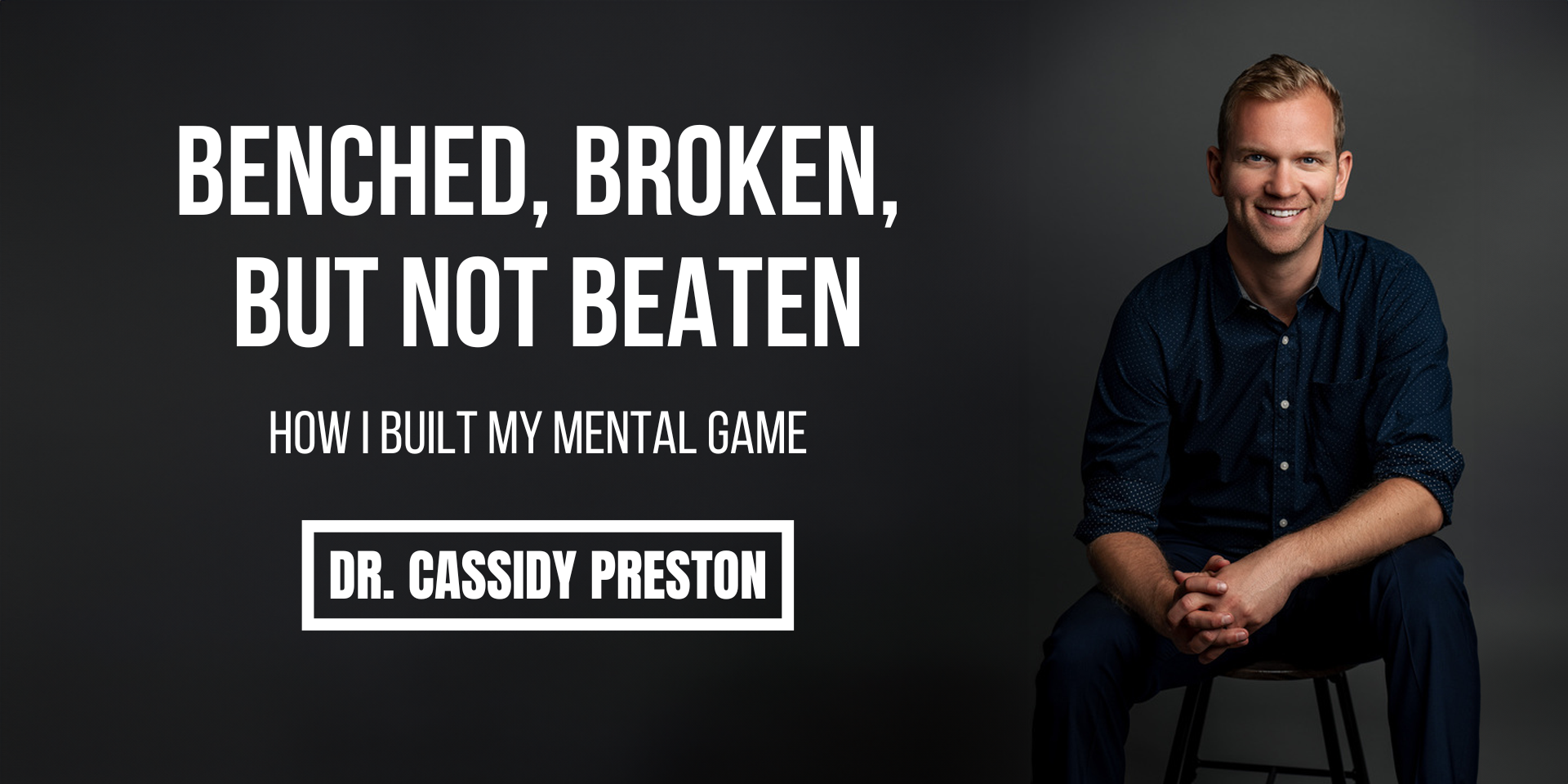
That’s what led me to become a Mental Performance Coach. It pains me to see others underperform and let their love of the game slip away.
My goal is simple: to help players escape the mental trap of trying to prove themselves. To help them show up with confidence, be present, and play free.
This blog was written by Coach Thomas.


 Blair has over 13 years of experience as a Professional Dancer, Assistant Dance Captain & Cast Manager, as well as an additional 17 years of training. Over the last 3 decades, she has lived and experienced first hand the highest of highs & lowest of lows that come with pursuing a career in the Performing Arts.


 As a former member of McMaster University’s women’s soccer team, Emilie intimately understands the demands and challenges athletes face on and off the field. Although she encountered many challenges as a high-level athlete, particularly struggling with self-doubt and overthinking, Emilie was able to make a remarkable transformation when she began to embrace the principles of sports psychology.







 Danielle Hanus, MA
 Monica Russell, MA