
Most athletes would say they want to play freely. Relaxed. Confident. Present.
But underneath the surface, many are carrying something heavier.
A need to prove they belong.
A fear of letting people down.
A quiet belief that this performance says something about who they are.
And that difference – playing with something to prove versus playing with nothing to lose – can change everything.
Playing with Something to Prove
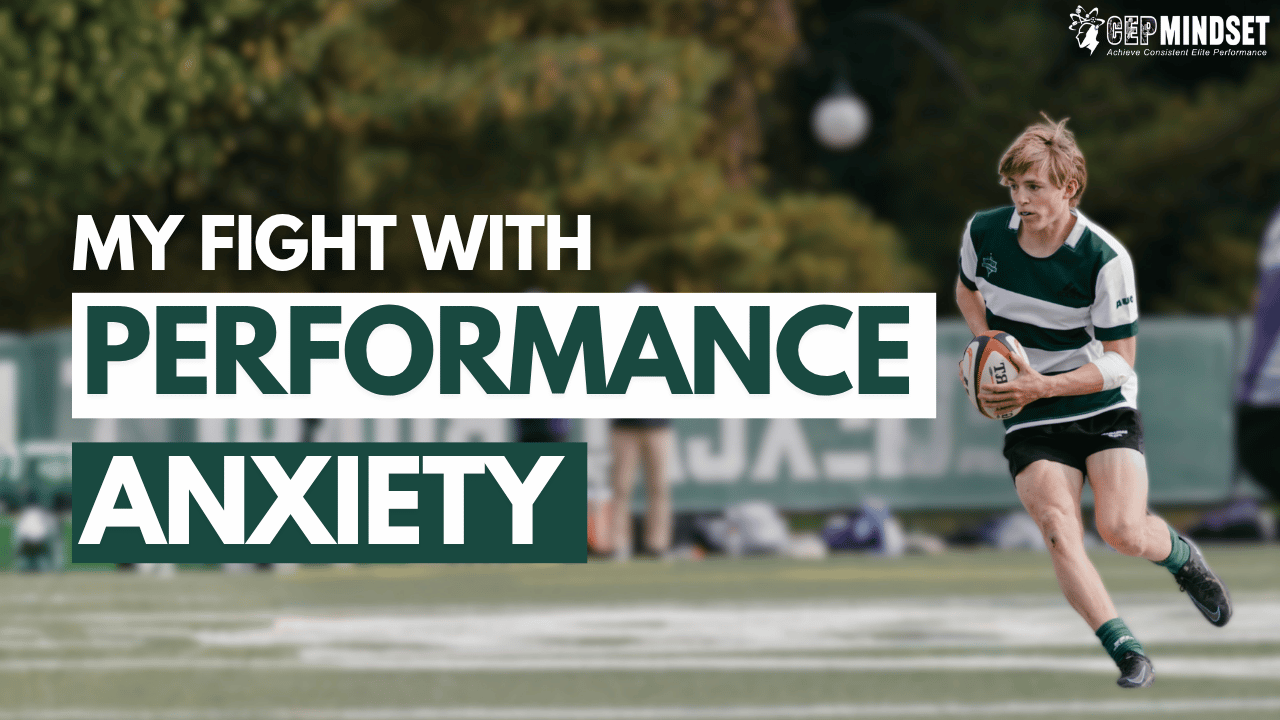
When you play with something to prove, pressure shows up early. You’re trying to validate your spot on the team. You’re chasing approval – from a coach, a parent, teammates, or even yourself. Every mistake feels loud and your attention narrows. You start playing not to fail instead of to succeed. You hesitate, force things, and overthink moments that should be instinctive.
Playing with something to prove is exhausting. It ties your worth to the outcome and makes your confidence fragile.
Playing with Nothing to Lose
Playing with nothing to lose doesn’t mean that the stakes disappear. It simply means your identity isn’t tied to the outcome. You still care. You still want to perform well. But the pressure feels different. Instead of trying to protect something, you’re expressing what’s already there.
You compete with clarity instead of tension. Your focus widens instead of narrowing. You trust your preparation and make decisions more instinctively. You’re willing to take risks because mistakes aren’t a threat to your identity and you stay engaged in the moment rather than consumed by the consequences.
And ironically, this is often when athletes access their best performances. Not because they lowered their standards, but because they stopped carrying the weight of needing to prove something.
A Tale of Two Start Lines
A few years ago, I toed the line for a 5K knowing exactly who I was racing.
I knew my competitors’ personal bests.
I knew the paces they were capable of running.
I knew, objectively, that I had the fitness to contend for a podium spot.
But when the gun went off, I wasn’t running my race.
I was running not to lose. Not to embarrass myself. Not to fall short of what I thought I should be able to do.
Unsurprisingly, it didn’t go well.
One year later, I found myself on a very different starting line: the 2024 Chicago Marathon.
The stakes were higher.
The distance was longer.
But mentally, the load was lighter.
I wanted to run well, of course.
But I wasn’t trying to prove anything to anyone.
I trusted the work I had done in my build, and I trusted myself to execute.
I ran with curiosity instead of fear, and with presence instead of pressure.
The result? It was the best race I’ve ever run.
The Shift That Changes Everything
The shift from something to prove to nothing to lose doesn’t happen by accident.
It happens when athletes learn to separate who they are from how they perform. When confidence is built on evidence and process, not outcomes. When mistakes are seen as part of competition – not proof you’re not good enough.
The irony is this: letting go of the need to prove yourself often unlocks better performance. You spend less time overthinking and more time trusting your body to do what it’s trained to do.
So before your next start line, game, or performance, ask yourself: am I trying to prove something or am I giving myself permission to compete freely?
This blog was written by Coach Elaina.

 Blair has over 13 years of experience as a Professional Dancer, Assistant Dance Captain & Cast Manager, as well as an additional 17 years of training. Over the last 3 decades, she has lived and experienced first hand the highest of highs & lowest of lows that come with pursuing a career in the Performing Arts.

 As a former member of McMaster University’s women’s soccer team, Emilie intimately understands the demands and challenges athletes face on and off the field. Although she encountered many challenges as a high-level athlete, particularly struggling with self-doubt and overthinking, Emilie was able to make a remarkable transformation when she began to embrace the principles of sports psychology.








 Danielle Hanus, MA
 Monica Russell, MA