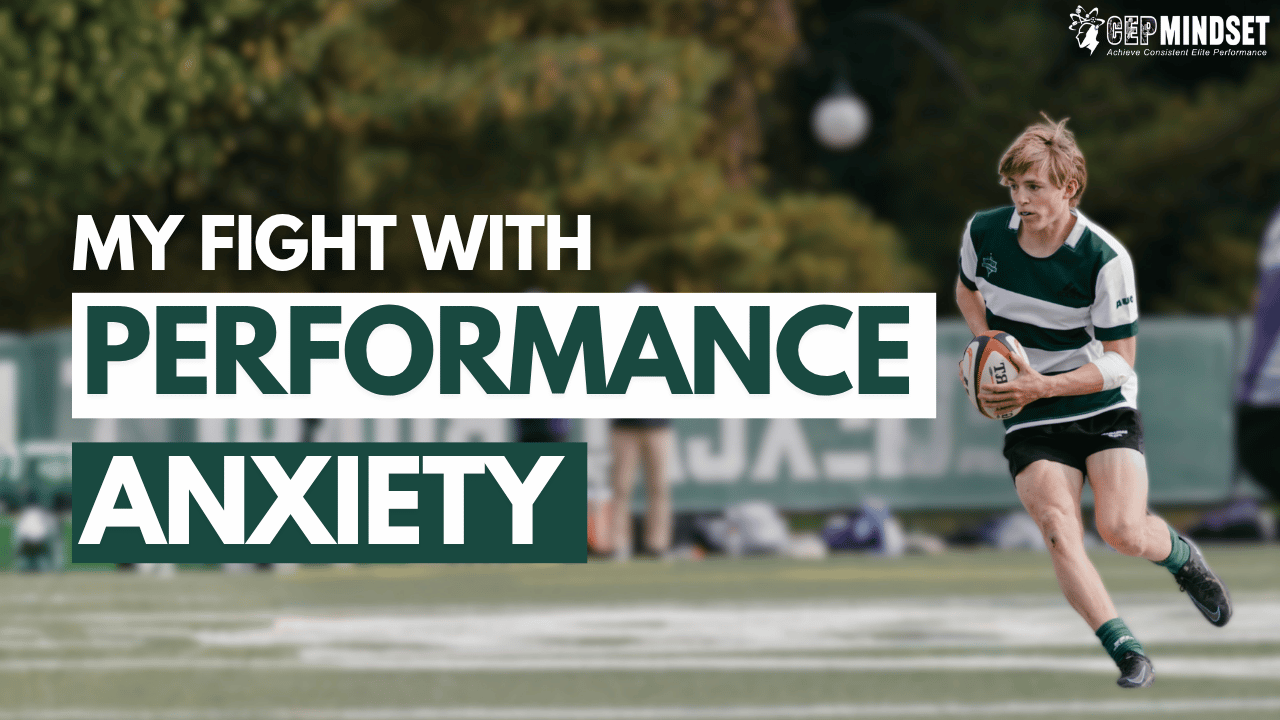

Picture this: you’re training hard. Dialed in. Focused on your process.
Then someone else has a breakthrough. A teammate gets more playing time. A competitor runs a faster time. A rival hits a career-best.
Suddenly, your energy shifts from competing to comparing and you begin focusing on someone else’s game or style of play instead of your own.
It’s one of the easiest traps to fall into and one of the most mentally draining.
The Mental Cost of Comparison
Comparison seems harmless at first because it feels like fuel.
You see someone else push harder, achieve more, or level up, and it sparks a fire in you: If they can do it, maybe I can too.
In small doses, that can be motivating – it nudges you to demand more of yourself.
But over time, instead of using others as inspiration, you begin measuring yourself against them. What was once motivating becomes distracting.
How do I know? Because I’ve been there.
I’ve played the comparison game – measuring my workouts and stats against everyone else’s. And trust me – it’s not a fun game to play. It left me dreading races I had trained hard for and stole the joy from a sport I loved.
It’s a slippery slope – and one most athletes know too well.
Instead of being present in your own race or your own game, you’re caught watching someone else’s.
You stop measuring effort and start measuring ego.
You lose sight of your process and your goals – and start chasing someone else’s.
Competing Keeps You in Control
At its core, competing is about ownership. It’s the belief that your actions, decisions, and mindset influence your outcomes.
When you compete, you focus on the things you can control: your effort, attitude, preparation, and response to adversity.
Comparison, on the other hand, shifts your focus to things you can’t control: someone else’s performance, their progress, their path.
It’s a bit like having two voices on your shoulders. One is the competitor, reminding you to stay anchored in your lane, trust your preparation, and measure success by your effort. The other is comparison, constantly pointing at someone else, whispering that their progress defines your worth.
Listen to the competitor, and you run your own race. Listen to comparison, and you start chasing someone else’s pace, outsourcing your momentum to someone else.
But here’s the catch: borrowed energy always runs out. And when it does, you’re left exhausted, unsteady, and disconnected from your own performance.
Bring It Back to You
You don’t have to eliminate comparison entirely. But you can notice when it’s happening and choose to shift.
Ask yourself—whether in the heat of competition or when reflecting afterward:
- Am I focused on what I can control right now?
- Is this thought helping me compete or pulling me into comparison?
- What part of my process needs my attention right now?
I’ve been there – caught up in everyone else’s stats, splits, and progress – and I know how exhausting it feels. But when I learned to anchor myself in my own effort and process, the joy came back. Races I had once dreaded became opportunities to measure my growth by my own standards, not someone else’s.
At the end of the day, your journey is yours. Comparison is tempting, but it rarely supports your best performance. When you focus on what’s within your control, you reclaim your story—and your confidence.
This blog was written by Coach Elaina

 Blair has over 13 years of experience as a Professional Dancer, Assistant Dance Captain & Cast Manager, as well as an additional 17 years of training. Over the last 3 decades, she has lived and experienced first hand the highest of highs & lowest of lows that come with pursuing a career in the Performing Arts.


 As a former member of McMaster University’s women’s soccer team, Emilie intimately understands the demands and challenges athletes face on and off the field. Although she encountered many challenges as a high-level athlete, particularly struggling with self-doubt and overthinking, Emilie was able to make a remarkable transformation when she began to embrace the principles of sports psychology.








 Danielle Hanus, MA
 Monica Russell, MA