Everything that you’ve been taught about the mental game is half-right.
Coaches and parents will give you well-intentioned advice, but it’s only built to make you feel better without helping you play better.
Over the past 7 years of coaching athletes I’ve found one quality that separates game-changing advice from everything else you hear:
It’s contrarian.
To be in the top 1% of athletes you have to be willing to think differently than the other 99%.
Here are the three mindset shifts that you can get started with if you want to stop thinking like everyone else.
The Good Version of You Should Never Compete
Georges St-Pierre is one of the all-time greatest fighters in mixed martial arts.
Nobody wanted to be in the cage with him because he made it his life mission to make you tap.
But outside of the cage he was a completely different person. You couldn’t find a nicer guy – everyone wanted to be around him. He even admitted that he hated fighting and it wasn’t part of his natural personality.
It was like two different versions of him existed.
Like many top athletes, he went through a competitive switch right before he fought. The qualities that made him a good person are great to live by day-to-day, but they’re terrible to bring into the cage.
There will be natural friction when you go through this switch. When you are trying to impose your will on your opponent and compete aggressively to get the victory – it goes against every moral lesson your parents tried to teach you.
When you have a competitive identity, that switch becomes automatic.
Start by picking an inspiration for your identity – the most common choices are a fictional character or animal. Then you can choose a name, so your brain knows exactly who is showing up.
Last, identify a physical trigger that activates your identity. It can be a piece of equipment or something you carry with you. Whatever you choose should mark the moment you leave the good version behind.
One of my favourite examples comes from a hockey player I coach. He’s a huge Iron Man fan, and thought it was a great fit for the sport because he wears armour and is ruthless in battle. Hockey is a cold sport so we went with Iceman for the name. We had a natural fit with his helmet being the physical trigger – as soon as he puts that on, the switch is complete.
Your Best Performances Happen When You Stop Trying to Have Them
A few months ago, a football player I coach walked into the first game of the season with only one thing on his mind:
“It’s time to lock in.”
But he spent so much time and energy trying to lock in that he kept running the wrong routes as a receiver.
Trying to lock in is the best way to guarantee you won’t.
Imagine I told you to walk across the room you’re in right now. You’d do it no problem. But if I asked you to make sure your foot travels 10 inches each time and you raise your knee to a 90 degree angle – you’d probably fall over within four steps.
Your conscious mind gets in the way of something you already know how to do.
This is what happens when you tell yourself to lock in. Your brain goes into monitoring mode and it starts scanning everything that you’re thinking and feeling just to make sure you’re locked in.
The instincts you’ve spent years building get pushed to the side.
The way to get into the zone is to keep your conscious mind busy with something simple, like a cue or your breath, so your body is free to do everything it’s trained to do.
For my football player, we chose the cue “first step.” As soon as the ball was snapped, his biggest priority was taking a violent, aggressive first step towards his target. Whether it was running a route or blocking a DB – his mind was focused on making that first step count.
The next game, he led his team in touchdowns and earned Player of the Game.
You Can’t Love Your Sport Until It’s Taken Something From You
2019 was a great time to be a Toronto sports fan, seeing the Raptors win the NBA Championship vs Golden State.
But you couldn’t help but feel horrible seeing Klay Thompson tear his ACL in Game 6 of the Finals. And even more horrible when he tore his Achilles during a workout.
Two seasons lost to injuries for one of the most lethal shooters in NBA history.
Klay was part of the Warriors dynasty, but it wasn’t until after these two freak injuries that he talked about a new appreciation for the game.
It’s easy to take things for granted when it’s all going according to plan – it’s only when you’re faced with a reason to quit that you connect with the thing that keeps you going.
Whether it’s an injury or a heartbreaking loss, don’t be so quick to get over it. Ask yourself: If I knew this was going to keep happening, why would I still show up?
Whatever the answer is, that’s the real reason you love your sport.
Your Signal It’s Working
When I first started coaching, I fell into the same trap of dishing out cookie-cutter advice. My athletes would make progress but I always felt there was another level they could get to.
It wasn’t until we challenged the status quo and did the opposite of what everyone else was saying that my athletes started delivering consistent elite performance.
The first time you try these strategies will feel uncomfortable because they don’t feel like the right thing to do.
But that awkward feeling is the signal you’re starting to think differently.
When someone gives you a piece of advice, like to lock in for a big moment, take note of the first thing you want to do – and then ask yourself what the 1% would do instead.
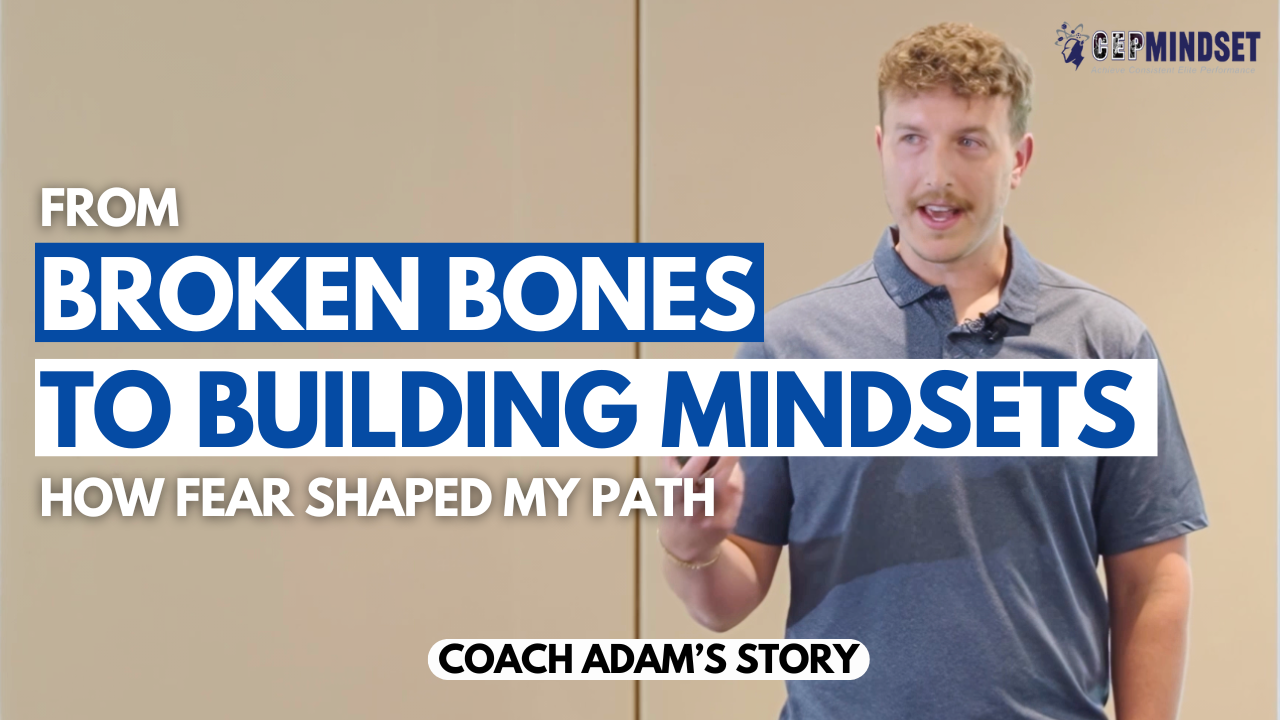
This blog was written by Coach Adam.
 Blair has over 13 years of experience as a Professional Dancer, Assistant Dance Captain & Cast Manager, as well as an additional 17 years of training. Over the last 3 decades, she has lived and experienced first hand the highest of highs & lowest of lows that come with pursuing a career in the Performing Arts.


 As a former member of McMaster University’s women’s soccer team, Emilie intimately understands the demands and challenges athletes face on and off the field. Although she encountered many challenges as a high-level athlete, particularly struggling with self-doubt and overthinking, Emilie was able to make a remarkable transformation when she began to embrace the principles of sports psychology.








 Danielle Hanus, MA
 Monica Russell, MA