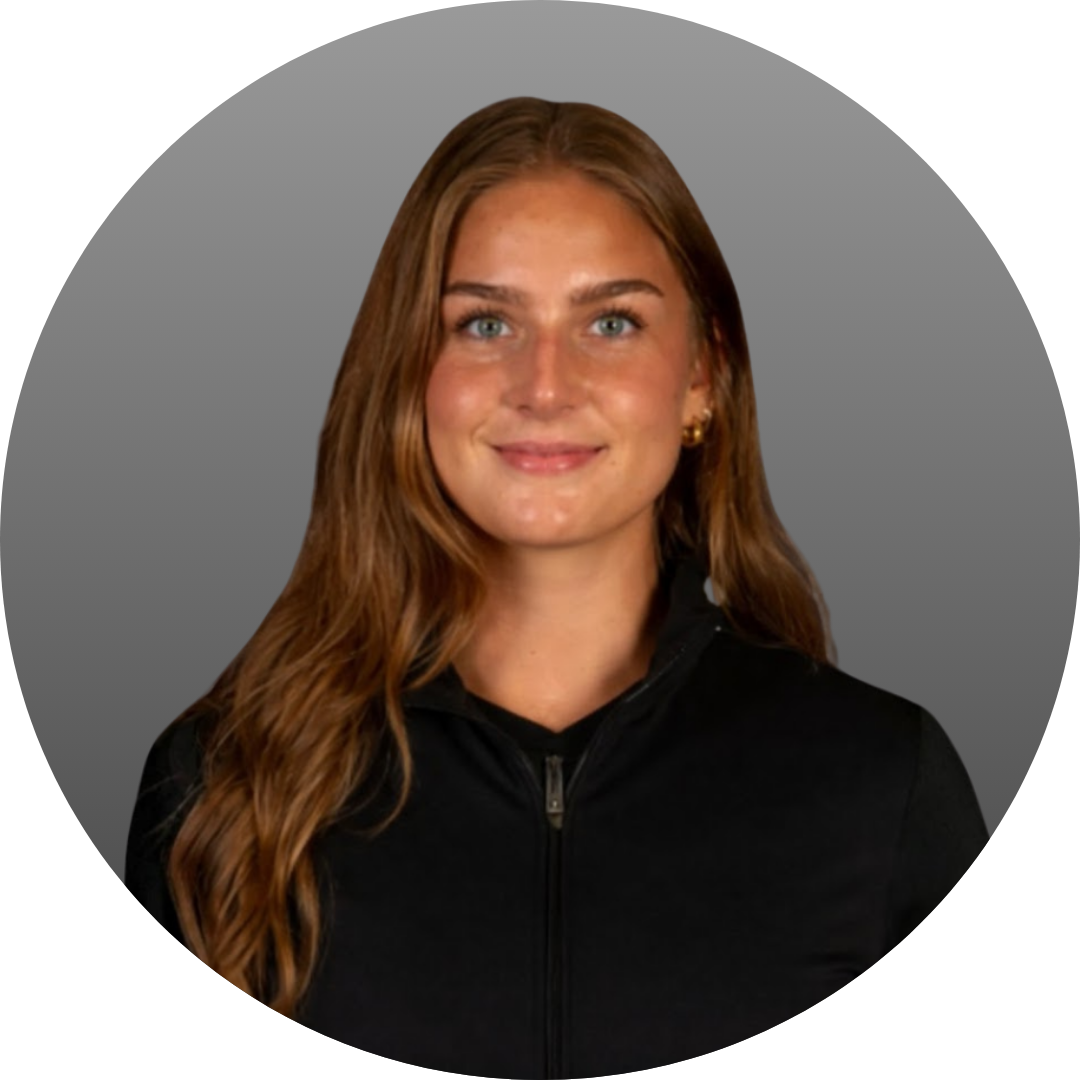
Danielle Hanus
Registered Psychotherapist (Qualifying) & Mental Performance Coach
Bio Highlights:
- Former International Swimmer for Canada, drawing on personal experience with performance anxiety and pressure to perform.
- Previously worked with Sport Psychologists and Mental Performance Coaches for her own nerves and results based thinking, moving to a more centered approach.
- Integrating mental health, mindset, and psychoeducation into collaborative therapeutic work with athletes to support the strengthening of therapeutic athlete-coach relationship.
- Supports athletes in rediscovering their love for competition through evidence-based, individualized mental performance approaches.
Education: Master of Arts (M.A.), Counselling Psychology, Yorkville University, Registered Psychotherapist (Qualifying)
Sport Background: 20+ years in competitive swimming, competing at the international level, 10 years on the Canadian Junior and Senior National Teams competing internationally
Core Clients: Swimming, Hockey, Gymnastics, Volleyball, Track & Field, Individual Sports
Read Coach Danielle’s Story Below

I’m 13 years old sitting with my mom in the doctor’s office waiting for the test results.
I’m tired and shaking like a leaf – because I haven’t eaten anything in days.
The door of the office opens and the doctor walks in. He sits down and starts flipping through his pages. He starts with:
“So we have the results, but it’s not what we thought.”
My heart drops.
“It’s not strep throat, it’s mononucleosis.”
I felt like I got hit by a freight train at that moment. Everything I had worked towards is instantly gone. My life was put on a universal pause that I couldn’t do anything about.
What Next?
All I could think about was everything that led up to this moment. From learning to swim, to starting competitive swimming, and finally starting to realize my potential. Immediately my mind became flooded with questions:
Will I be able to swim again?
How long will recovery take?
Will I be okay for the rest of the season?
How am I going to manage?
What is going to help me get better?
I knew how much I loved swimming, but now I was afraid that I was going to lose it for good.
As a 13 year old, my emotions were running high – especially since I was used to doing so many things. I went from this never-ending cycle of school, training, and competing to spending the foreseeable future stuck in my house. I was barely able to stay awake for more than a few hours at a time and couldn’t eat anything. I lost 25 pounds, looking and feeling like a fraction of myself.
I felt hollow – a shell of myself from before I got sick.
After a few weeks I was barely allowed back at school. I could attend but wasn’t able to participate in any physical activity. Still, it felt like a huge step for me. As the weeks went by I started to feel better each and every day up until the point I was cleared to swim again.
This long pause in my athletic career forced me to reflect. I had to face the uncertainty of what the future of swimming looked like for me.
I was ecstatic to get back in the pool, but I wasn’t sure if I’d ever get back to where I was.
The Chance To Try Again
Even though I was cleared to swim, there was still the hurdle of getting clearance to compete. This involved weekly blood samples to determine if my body was ready. It was a long shot, but each appointment brought me one step closer to competing again that season.
It was the hope I needed as everyone around me doubted I could do it.
Finally, I got the news I was waiting for – I was healthy enough to compete. Instantly I felt this weight being taken off my shoulders that I had unconsciously been carrying around for months.
Underneath all my excitement was the realism of what I could accomplish. Being away from competing for months meant winning a medal wouldn’t be possible.
So for me, it was all about just going out there and trying.
Oh! So That’s What That Is Supposed to Feel Like?
For the first time, I swam without the burden of expectations. I raced with this “free” feeling that I’ve never felt before.
And somehow, I made it to the final day of competition.
I squeaked my way into the final of the 100m Backstroke. I was shocked at this point, I didn’t think that was a possibility. Sure I was excited, but I was also feeling nervous again about what might happen.
The day felt like a blur – between napping between sessions, to warming up again, and getting ready for my race standing beside the block. I had no idea what to think of or what to do.
As marshals blow the whistle to have us enter the water, I get myself in my ready position, and I hear “take your mark. *Beep*”
And we’re off.
Watching the roof panels move past as I go down the pool, seeing the false start rope and backstroke flags come and go, I get ready to turn into the final 50 of my season and I see my whole team there cheering me on.
It was a surreal feeling knowing that I had teammates supporting me, during one of the most turbulent times in my life. I keep spinning my arms, kicking my legs, feeling my lungs and muscles burning as I approach the last 5 meters.
I touch the wall not knowing where I am or what the clock says. After a few seconds I found out I finished third.
Third! It wasn’t a win by any means but it was my win – the win that meant the most to me.
I was so proud of myself and I felt on top of the world. It gave me the hope and confidence to know I could do this.
Shifting from Athlete to Coach
That free and limitless mindset became the foundation of every season after and was something I carried with me throughout my university career, and when swimming at the Swimming Canada High-Performance Center. Having the opportunity to begin working with a sport psychologist and taking my own undergraduate psychology courses, I recognized that I had found the field that would later become my career.
As I studied sport psychology and reflected on all the accomplishments throughout my swimming career, I realized it was never about how well I did. It was about what struggles I faced before, and how I could bring myself back to a place where I believed in myself.
I learned that it’s not about what others wanted from me, but truly believing in myself and wanting to be my best version.
It’s the same philosophy I bring into sessions with athletes. We can measure success by accomplishments and tangible moments, but understanding what success looks beyond those can help athletes start believing in themselves.
Mindset and mental health is anything but easy. You might learn things about yourself which you might have never considered before, and guess what…that’s okay! That is the point!
Learning to be comfortable in the uncomfortable, is all about recognizing that different doesn’t have to be scary. It means you’re doing something different than you’ve done before.
This is the process I take with clients. And it’s all about shaping and evolving your core beliefs.
You only get one life, so do what you can to make the most of it. If you don’t try, you’ll never know what could be. Don’t let fear hold you back from becoming the best version of yourself.
You can learn more about Coach Danielle by clicking the video below:
 Blair has over 13 years of experience as a Professional Dancer, Assistant Dance Captain & Cast Manager, as well as an additional 17 years of training. Over the last 3 decades, she has lived and experienced first hand the highest of highs & lowest of lows that come with pursuing a career in the Performing Arts.

 As a former member of McMaster University’s women’s soccer team, Emilie intimately understands the demands and challenges athletes face on and off the field. Although she encountered many challenges as a high-level athlete, particularly struggling with self-doubt and overthinking, Emilie was able to make a remarkable transformation when she began to embrace the principles of sports psychology.








 Danielle Hanus, MA
 Monica Russell, MA