
Imagine yourself getting ready for a big game – maybe it’s the first game of the season or against a big rival. Over the last few weeks, you’ve put in a lot of extra work to feel ready and confident. But within the first five minutes, you feel off. A few uncharacteristic mistakes, and boom – panic takes over.
It’s crazy how quickly we start assuming the worst:
“Well, this isn’t good”
“This is not gonna be a good day”
“We’re definitely not winning today…”
But the first few minutes don’t guarantee how the rest of the game will go.
Let’s chat about how to pivot after a rough or slow start.
The Start Is Not the Story
The first step is acceptance.
You want to come to terms with what happened, the negative thoughts and feelings that came up, and how it made you worry about the end result.
Even something as simple as, “Okay, that wasn’t the start I wanted.”
You’re not pretending it didn’t happen, but you’re also not fighting with it. Those bad first few minutes, shifts, plays, etc. are already in the past.
The fact is, mistakes happened. Or maybe your opponent got ahead.
I want you to catch yourself creating a bigger narrative from it. For instance, “I’m playing so bad, coach is definitely going to pull me. This game is already over.”
Separate what’s actually happened from what you’re predicting will happen next.
Next Play Mentality
Once you’ve accepted the mistake, the next step is to direct your focus on the next play.
Point your full attention toward the very next thing you can influence or control.
Back in college, these opportunities allowed me to unleash my inner competitor, and that frustration turned into fire and fuel. I wouldn’t let myself give up so quickly. At times, you could even see that determined look on my face of, “I’m going to figure this out.”
So for you, take a second to think about a time you didn’t settle or just push through, and truly made the choice to keep competing.
It might have included a thought like:
“There’s still so much time in the game, just go for it.”
“The next play is a chance to shift momentum.”
If it helps, you can also think about some of your favorite athletes or sports teams – they have inevitably been down or struggled at some point in time. But… what did they do?
They kept competing.
The comeback storyline is one of the most entertaining as a spectator because you never know what will happen. And the truth is… it’s not over until it’s over.
You can bounce back and change the trajectory of your performance.
Don’t Predict the Ending
Take pride in the way you prepare for your next game or performance. But when it starts, accept the possibility that it might not go exactly to plan.
You can’t guarantee you’ll always start strong.
As the earlier examples showed, including my own, there will be games where you feel off in the first five minutes. There will be performances where your competitors get ahead early.
But don’t predict the ending. Challenge that assumption mode we’ve talked about.
When a bad start happens, accept it. Reset and set your intention for the next play. Channel your inner competitor and give yourself the chance to create a comeback.
The lesson here is simple: keep competing.
A bad start is just that – a bad start. You have the choice in what happens next.
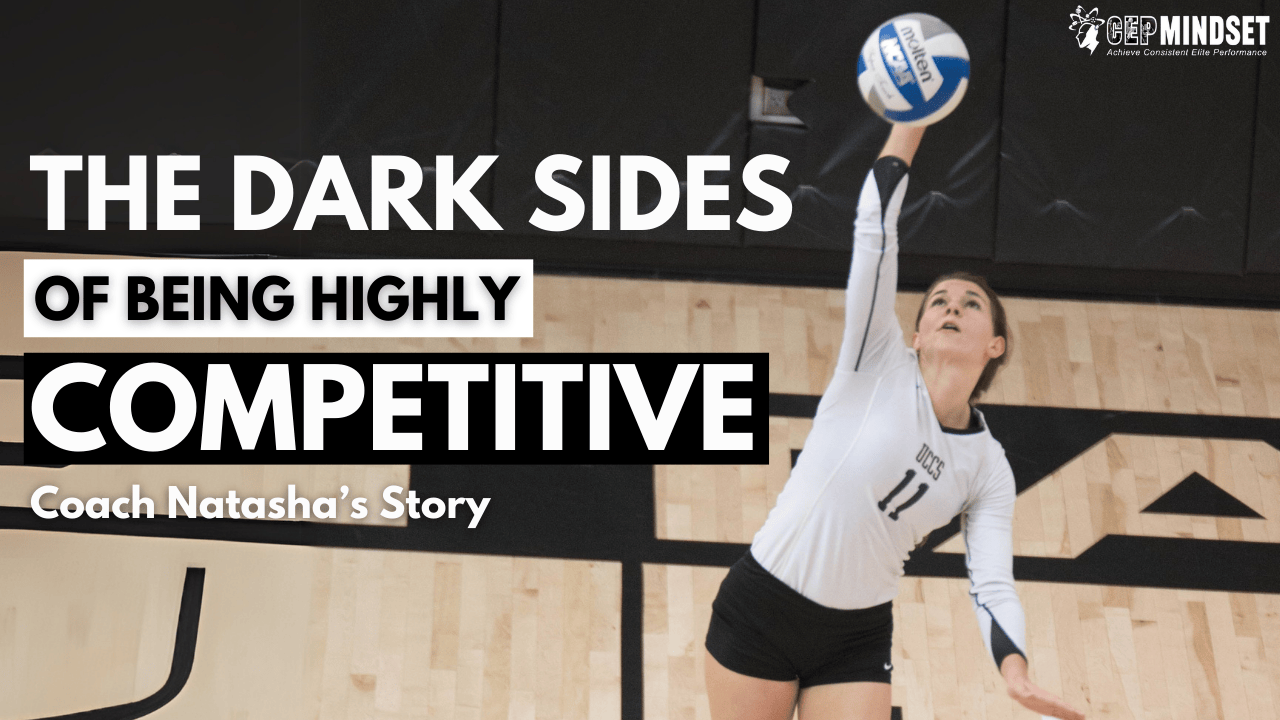
This blog was written by Coach Natasha.
 Blair has over 13 years of experience as a Professional Dancer, Assistant Dance Captain & Cast Manager, as well as an additional 17 years of training. Over the last 3 decades, she has lived and experienced first hand the highest of highs & lowest of lows that come with pursuing a career in the Performing Arts.


 As a former member of McMaster University’s women’s soccer team, Emilie intimately understands the demands and challenges athletes face on and off the field. Although she encountered many challenges as a high-level athlete, particularly struggling with self-doubt and overthinking, Emilie was able to make a remarkable transformation when she began to embrace the principles of sports psychology.








 Danielle Hanus, MA
 Monica Russell, MA