
I am 7 years old, standing on the court for the first time. The gym echoes with bouncing basketballs, squeaking shoes, and the chatter of what feels like a million kids. I stare down at my shoes, trying to look busy dribbling even though the ball keeps rolling away.
The coach claps his hands. “Alright, everyone, spread out!”
I freeze. My hands slide straight into my pockets.
“Hey! Hands out!” the coach yells across the court.
But despite his pleas, I keep my hands in my pocket – so nobody can pass me the ball.
At the end of practice, I walk to my mom’s car. I made it through without touching the ball once, which felt like success at the time.
But the whole drive home, I stared out the window wishing I’d actually played.
The Parking Lot
I continued to play basketball for the next 6 years. I got more comfortable, and my hands did eventually come out of my pockets, but the fear behind why they were there in the first place, never completely went away. I was still afraid to make mistakes, so I played safe. I hesitated instead of taking chances, avoided situations where I might fail, and made it harder for myself to grow. Over time, that fear didn’t just affect how I played, it changed how I felt about playing. Eventually, it pushed me away from a sport I once loved.
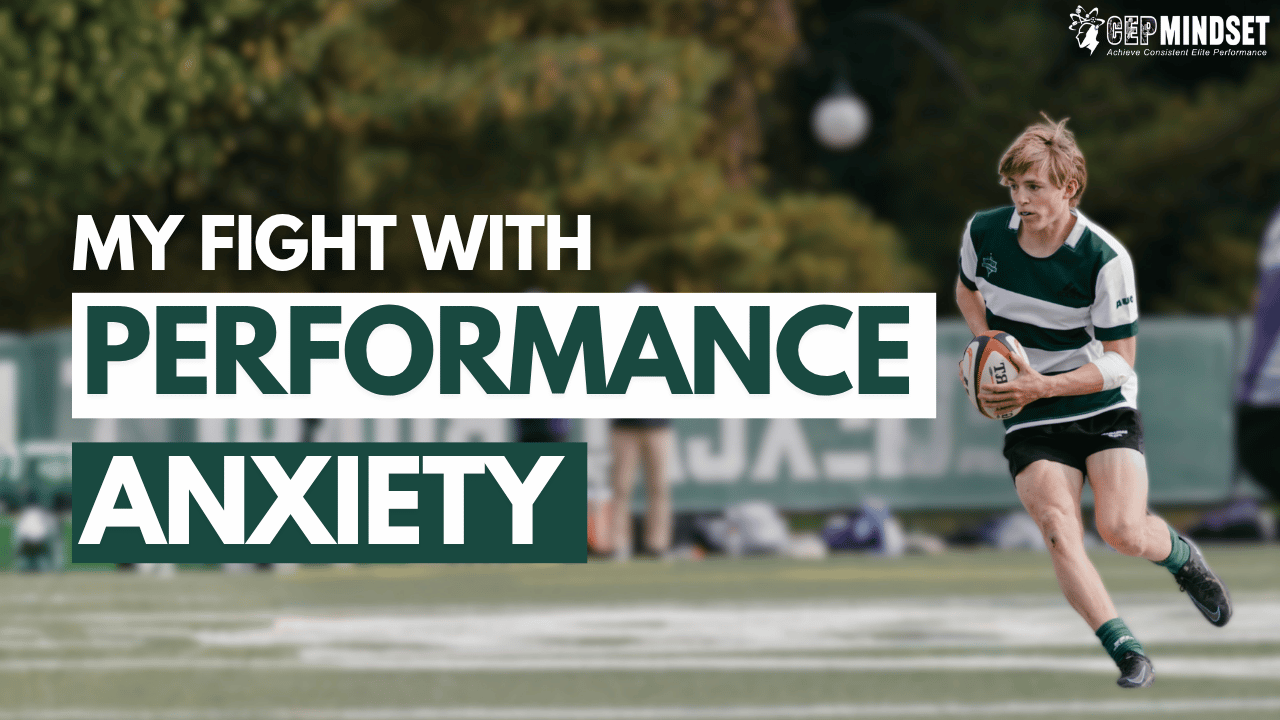
When I’m 13, I switched to rugby. Within two years I’m named captain of my team and invited to train with the provincial squad – and even attend some national level events.
On the outside, this looked like a dream come true. But on the inside, it felt like my worst nightmare.
My mom drove me to my first practice, but all I wanted to do was turn around and go home.
I convinced myself the coaches had made a mistake inviting me.
That they would be disappointed with who they got, and ultimately, that I didn’t belong.
I reluctantly go to a couple of the provincial rugby team practices, but eventually convince myself I shouldn’t go back – and I don’t.
I continue to play for my club team – where I do well, and I feel comfortable. But I keep watching some of my teammates who go off to play for provincial and national teams.
That regret slowly gets bigger and bigger – to the point where I can’t ignore it anymore.
And when the Covid Pandemic shut everything shut down, all I could do was think about the times I walked away.
The hands-in-pockets seven-year-old. The girl who sat in the parking lot. The one who convinced herself she didn’t belong before anyone else could.
I made a promise: Next time I’m afraid, I won’t run. I’ll just play afraid.
Playing Afraid
When I get to university, I try out for the rugby team. My hands shake during warm-ups. My stomach twists before every practice. But I show up and make the team.
I should feel proud – like I finally broke through.
But every practice still feels like a test. Every game feels like proof I might not be good enough. I play tight and don’t take risks. I try my best to not make any mistakes.
The spark – the thing that made me fall in love with rugby in the first place – starts to fade.
I’m literally having no fun.
Playing afraid worked in the sense that I kept showing up. But it didn’t change the fact that I was still afraid.
Changing The Story
One day at practice, the coach pulls me aside.
“You’re kicking today.”
“I don’t kick,” I say automatically.
“You do now.”
I’ve told myself this story for years – since I was six years old playing soccer. I can’t kick. It became a fact about me, as certain as my name.
But the coach doesn’t care about my story. He hands me the ball and points at the posts.
I kick.
And it’s… fine. Not perfect. But fine.
I kick again. Better this time.
By the end of practice, I’m one of the team’s kickers.
I walk off the field confused. If I was wrong about that for ten years, what else have I been wrong about?
Maybe “I’m an anxious player” isn’t a fact. Maybe it’s just another story I learned to believe.
I start researching sports psychology and mental performance. I read about the Alter Ego – the idea that you can choose who you are on the field. That fear doesn’t have to be your identity.
I create routines and pre-game resets so I can focus on the process instead of the outcome.
Slowly, I start playing differently. Not fearless. But free.
Finding My Purpose
Some of the girls I trained with went on to play for Team Canada. A couple made it to the Olympics.
I used to wonder if that could have been me. But that question doesn’t ache anymore – it drives me.
Because I know exactly what held me back. And I know it’s holding other athletes back right now.
I don’t want them to wait until the end of their careers to figure out what I finally learned: that fear doesn’t have to decide for you. That the stories you tell yourself aren’t facts.
That you can choose who you want to be.
At CEP, I help athletes break the pattern I lived for years – fear, avoidance, regret.
Sport gave me everything – friendships, lessons, resilience I’ll carry forever. But I also watched fear steal years from me.
I don’t want other athletes to look back with that same regret.
The seven-year-old with her hands in her pockets deserved to play freely. To take risks. To mess up and try again without the weight of fear crushing her.
Every athlete deserves that. And now, I help them get there.
This blog was written by Coach Baylie.
 Blair has over 13 years of experience as a Professional Dancer, Assistant Dance Captain & Cast Manager, as well as an additional 17 years of training. Over the last 3 decades, she has lived and experienced first hand the highest of highs & lowest of lows that come with pursuing a career in the Performing Arts.


 As a former member of McMaster University’s women’s soccer team, Emilie intimately understands the demands and challenges athletes face on and off the field. Although she encountered many challenges as a high-level athlete, particularly struggling with self-doubt and overthinking, Emilie was able to make a remarkable transformation when she began to embrace the principles of sports psychology.







 Danielle Hanus, MA
 Monica Russell, MA